2026年5月11日
体育数据API详解:您需要了解的一切
体育数据API(通常称为体育博彩或赔率API)是一类工具,可让博彩平台、应用程序和开发者直接连接到体育信息系统,并通过结构化数据请求获取实时比分、统计数据和赔率。近期研究表明,英超等联赛中的光学追踪系统每场比赛可生成约320万个数据点,从而产生海量信息,这些信息可通过这些API进行分发。 作为体育博彩运营商,实时接收这些数据可让您即时更新赔率、管理风险,并在比赛期间提供精准的实时投注市场。本文将为您详解体育数据API的方方面面,助您了解其运作原理以及它们如何为现代体育和博彩系统提供动力。


在本文中
订阅
保持领先地位
获取有关体育数据、博彩趋势和行业新闻的最新见解——直接发送到您的收件箱。
这是一个标题
Key takeaways:
- Sports data APIs deliver real-time sports information automatically
Sports data APIs connect apps and websites to live sports data sources. This allows platforms to automatically display scores, player stats, schedules, standings, and betting odds without manual updates, keeping everything synchronized with live games.
- They make live sports updates simple to integrate
Platforms request data from the API, and the API instantly returns structured information like scores or player stats in formats such as JSON or XML. This makes it easy for developers to plug real-time sports data directly into websites, apps, and betting platforms.
- They power everything from betting apps to fantasy sports
Sports data APIs sit behind many modern sports products. Sportsbooks use them for live odds and in-play betting, fantasy platforms rely on them for player performance updates, analytics teams use them to study trends, and sports media apps use them to deliver live match updates to fans.
- Not all sports data APIs are equal
The best providers offer fast updates, accurate data, and broad coverage across sports and leagues. When choosing an API, companies should look for reliable uptime, low latency for live events, easy integration, and strong developer support.
- LSports helps sportsbooks turn data into engagement
Today’s bettors expect more than just scores and odds. LSports combines real-time sports data with tools like live match animations, AI-powered betting tips, interactive scoreframes, and gamified experiences. This helps sportsbooks keep users engaged during matches and encourages more in-play betting activity.
What are sports data APIs?
Sports data APIs are automated data pipelines that deliver up-to-date sports information from external databases or live feeds straight into a website or app.
Instead of manually updating information, these APIs automatically provide key data such as:
- Scores
- Player stats
- Schedules
- Standings
- Betting odds
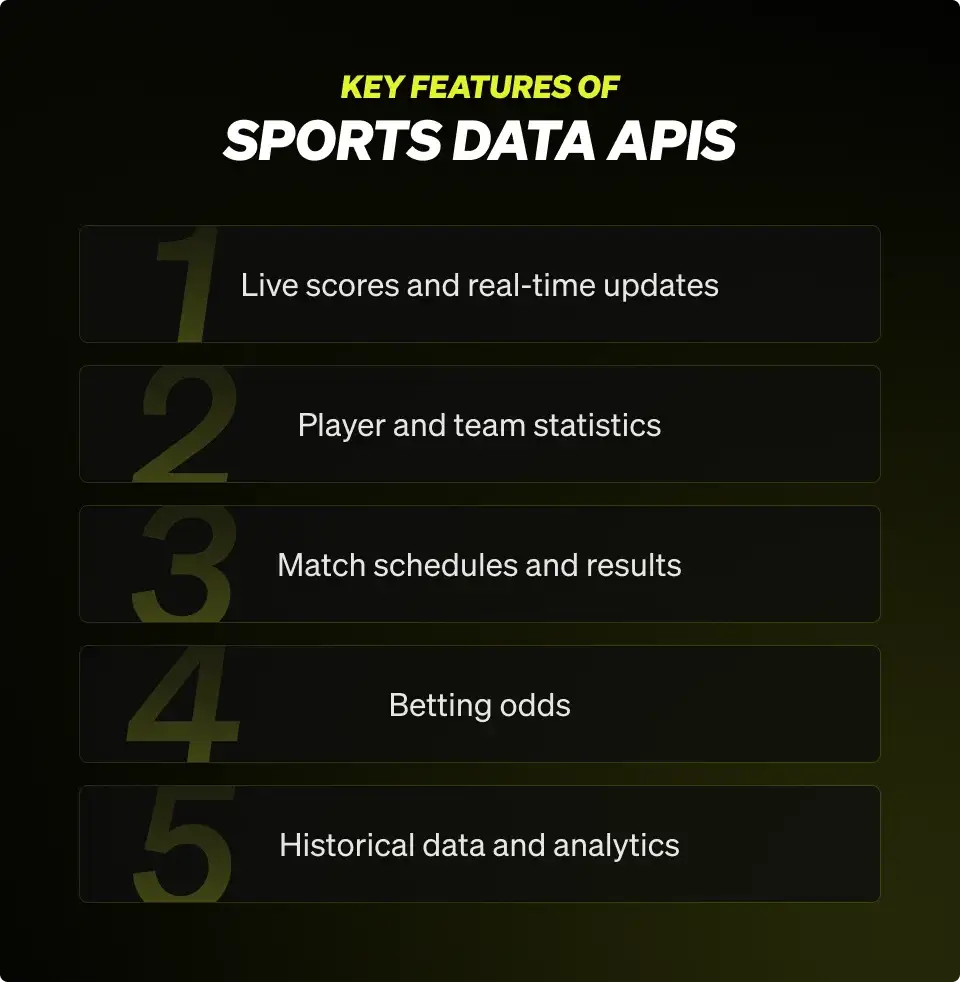
For example, a sportsbook API can feed live game results, injury updates, and updated odds directly into a bookmaker’s site or app. This means when an event happens, like a goal in a soccer match, the API instantly sends that update to the platform so statistics and odds refresh in real time.
How do sports data APIs work?
Sports data APIs operate using a simple request–response model. Your platform sends an HTTP query to the API to retrieve the live score of a specific game. The API server then processes that request and returns the relevant data.
Here is how the process works:
- Send request: The sportsbook’s backend sends an HTTP request to the API endpoint with parameters such as the sport (basketball), league (NBA), game ID, and authentication credentials (API key or token).
- Server processes data: The API server validates the request and then pulls the latest information from its databases or live data feeds, including the current score, player stats, and betting odds.
- Receive response: The API returns the requested data in a structured format like JSON or XML. For example, a JSON response might look like:
{ “home_team”: “Lakers”, “away_team”: “Warriors”, “home_score”: 98, “away_score”: 95, “quarter”: 4, “time_remaining”: “02:14” }
- Update platform: The sportsbook’s system parses the response and updates the platform’s interface and internal databases. This might update the on-screen scoreboard, player statistics, or adjust live betting odds.
- Continuous updates: During live games, this process repeats continuously, often every few seconds, or through push notifications or webhooks. Each new event (a basket, foul, timeout, or quarter change) triggers an update so the sportsbook stays synchronized with the live action.
4 popular use cases of sports data APIs
From fantasy leagues to live betting platforms, real-time data has become the backbone of modern sports products. Below are some of the most common ways organizations use sports data APIs to enhance their platforms:
1. Online sportsbooks and betting apps
Online sportsbooks rely on sports odds APIs to access real-time odds, match results, and a wide range of betting markets. Fast and accurate data is especially important for live betting, where odds can change within seconds as the game unfolds.
For example, 1win, one of the largest online sportsbooks in the world, uses sports data providers such as Lsports to receive official sports data feeds.
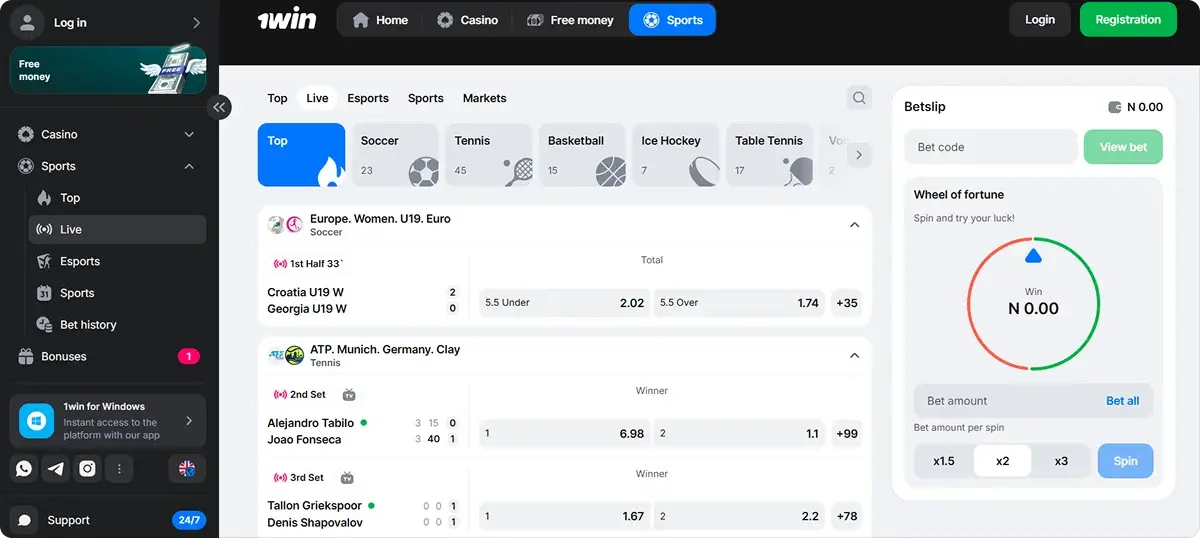
Through this type of API integration, 1win can access:
- Live match data (score, game time, match events such as goals, red cards, substitutions, penalties)
- Real-time odds and pricing data from multiple bookmakers
- Player and team statistics during the game, including advanced metrics
- Official league and event feeds used for live betting
- Structured market data covering thousands of betting markets
2. Fantasy sports platforms
Fantasy sports platforms rely heavily on sports data APIs to deliver real-time player statistics, scoring updates, and performance projections. This constant stream of data allows users to make informed roster decisions and stay engaged throughout every match.
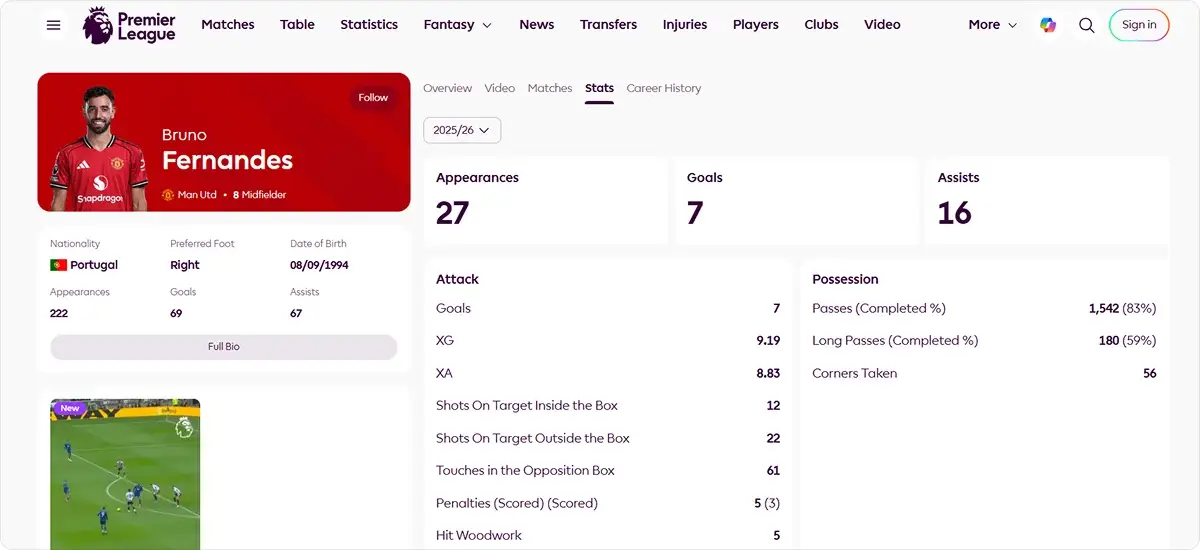
A good example is Fantasy Premier League, one of the most popular fantasy games in the world. On the platform, players can view:
- Live points
- Player statistics (goals, assists, minutes played, expected goals)
- Injury updates
- Upcoming fixtures
- Team performance data
- Detailed match updates
3. Analytics dashboards
Sports data APIs are also widely used to power analytics dashboards for teams, analysts, and media organizations. These platforms turn raw sports data into visual reports, charts, and performance metrics that are easier to interpret.
With access to historical and real-time data, analysts can evaluate player performance, identify trends, and support strategic decision-making across scouting, match preparation, and performance optimization.
4. Sports news websites and mobile apps
Media platforms integrate sports data feeds to deliver live scores, match timelines, and detailed player statistics to their audiences. This allows fans to follow games in real timeand stay informed even if they are not watching the event.
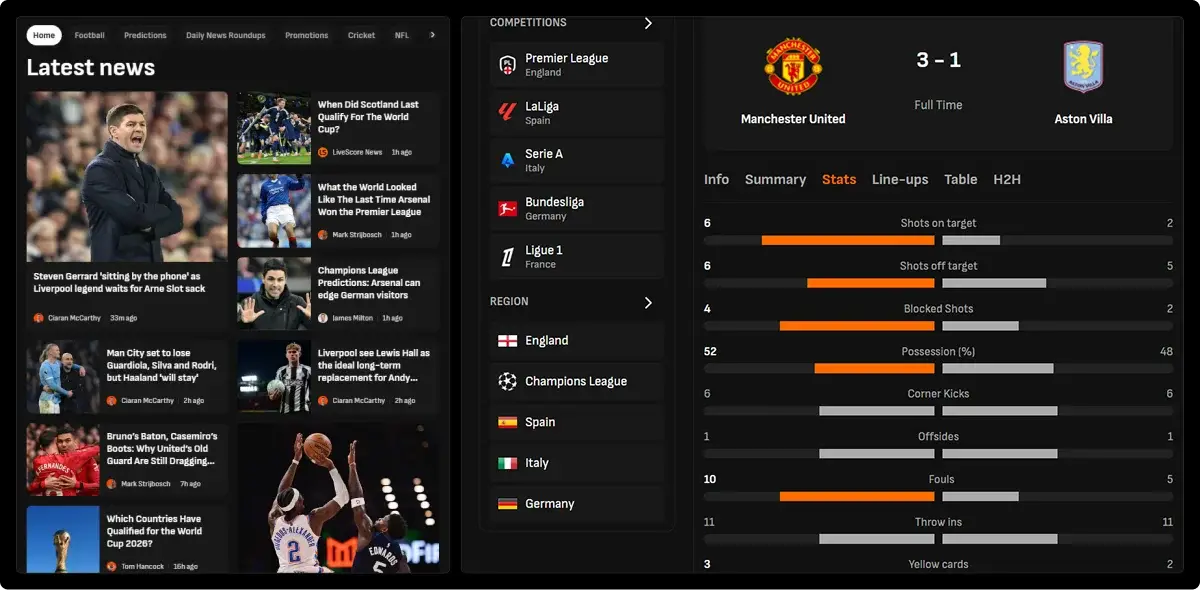
A good example is LiveScore, which provides news, instant match updates, goal alerts, lineups, and detailed statistics across hundreds of competitions.
Best sports data APIs in 2026
Below are some of the best sports data APIs in 2026, widely used by sportsbooks, betting platforms, and sports media companies:
1. LSports

LSports is a global sports data solutions provider that equips sportsbooks with the data and insights necessary to optimize profitability, strengthen player engagement, and remain competitive in a rapidly evolving betting market. It combines a comprehensive odds API with a full operational platform, known as ARENA360.
The odds API is available in two formats. OddService provides raw bookmaker lines from over 100 global operators, offering trading teams full transparency into market-wide pricing. TRADE extends this functionality by generating customized average odds based on operator-defined preferences. It includes built-in margin control, automated suspensions triggered by real-time conditions, and settlement capabilities, all delivered within a single feed with 0–1 second latency for in-play events.
Other ARENA360 modules are designed to support the full scope of sportsbook operations:
- DEFEND offers configurable risk management capabilities, combining automated safeguards with manual controls to help operators manage exposure effectively.
- BOOST provides live benchmarking intelligence that integrates directly with trading workflows, enabling operators to identify and respond to margin and coverage gaps in real time.
- ENGAGE delivers frontend tools focused on player engagement, including live scoreframes, match trackers, and an AI-powered betting assistant.
LSports independently gathers sports data from more than 100 live sources using AI-powered computer vision and web scouting technologies, providing operators with access to feeds covering:
- 100多项体育项目
- 15,000多海里
- 2,500个市场
- 每月超过175,000场赛前活动
Start with LSports today and power your platform with real-time sports data!
2. Sportradar

Sportradar is a global sports technology company that provides real-time sports data, analytics, and digital content for media companies, betting operators, leagues, and teams. Its Sports Data API delivers live scores, player statistics, match events, and odds, covering 80+ sports, more than 500 leagues, and over 750,000 sporting events each year.
Because Sportradar has official partnerships with major leagues and organizations such as the NBA, NHL, MLB, and UEFA, it provides highly reliable official data feeds, though this premium access often makes it a more expensive option compared to many other sports data APIs.
3. OddsMatrix

OddsMatrix is a sports betting data platform developed by EveryMatrix that provides real-time odds feeds and sports data APIs for bookmakers, betting platforms, and media companies. Its data services cover 75+ traditional sports and 20+ esports, delivering hundreds of thousands of pre-live and live sporting events each month, along with:
- Live odds
- Scores
- Statistics
- Automatic market settlements
The platform aggregates odds from 150+ bookmakers and combines multiple data sources to provide customizable feeds, making it a flexible and scalable option for sportsbooks and odds-comparison services.
How to choose the best sports data API
When evaluating potential providers, it’s important to focus on criteria that align with your platform’s specific needs. Key factors to consider include:
- Accuracy and reliability: The API should deliver consistent, error-free data because even a small mistake, like an incorrect score or delayed update, can disrupt betting markets. Choose a trusted provider with a proven track record, near-zero error rates, and high uptime.
- Real-time performance: Low latency is essential for live betting, so evaluate how quickly the API updates in-game events. The best providers deliver updates such as goals, points, and odds changes within 1–2 seconds, even during peak traffic.
- Coverage: Make sure the API includes all the sports, leagues, and competitions relevant to your platform. A strong provider will cover both major leagues and smaller tournaments, including local competitions and global events like the FIFA World Cup.
- Ease of integration: APIs with clear documentation, code samples, and SDKs are much easier to integrate into your platform. Look for providers that offer developer-friendly tools, client libraries for your tech stack, and sandbox environments for safe testing.
- Customization and flexibility: A good sports data API should allow you to request only the data you actually need. This flexibility helps reduce bandwidth usage, lower costs, and optimize performance during high-traffic periods.
- Support and service: Reliable technical support is crucial when dealing with live sports data. Choose a provider that offers responsive 24/7 support so any issues can be resolved quickly and your betting platform continues running smoothly.
However, raw sports data alone is no longer enough to keep users on your platform. Today’s betting audience expects far more than scores and odds. According to industry research, 77% of sports bettors are willing to switch from their most frequently used betting platform to another if the experience is better elsewhere. That means sportsbooks must go beyond simply delivering data to transforming that data into engaging, interactive experiences that keep users active and invested. This is what separates the best sports data APIs from basic data providers.
How LSports turns sports data into engagement
LSports enhances its sports data ecosystem with a suite of engagement tools designed to help sportsbooks keep bettors active before, during, and after matches. These tools convert raw sports data into interactive experiences that drive retention and betting activity.
With LSports, you get:
- Score Frame: Real-time scores and statistics – Score Frame is a customizable widget that delivers live scores, standings, and detailed match statistics in real time. Available in more than 30 languages, it allows sportsbooks to easily integrate comprehensive match information into their platforms, improving visibility and accessibility for users following live events.
- Live Match Pro: Real-time match animations – Live Match Pro provides play-by-play visual match animations, allowing users to follow every key moment in a game — including goals, fouls, substitutions, and more. This real-time visualization keeps bettors engaged during live events and encourages in-play betting.
- Pre-Match Pro: Data-driven betting insights – Pre-Match Pro equips bettors with the information they need before placing a wager, including league standings, head-to-head statistics, and player analytics. By providing deeper context and insights, sportsbooks can help users make more informed betting decisions.
- Tipster: AI-powered betting tips – Tipster uses real-time analytics to generate smart betting suggestions for both pre-match and live events. These AI-powered tips help guide bettors toward potential opportunities while increasing user engagement and betting activity.
- Points in Play: Gamification for sports betting – Points in Play introduces a gamified betting experience, running quizzes, trivia, and contest-style activations alongside live sports events. This interactive layer keeps users engaged even when they are not actively placing bets, helping sportsbooks increase retention and in-play participation.
Start your free trial today and transform live sports data into engaging betting experiences with LSports.