9 de noviembre, 2026
How to Handle Sports Data Feed Errors: A Guide for Sportsbooks
Learn how sportsbooks can detect sports data feed errors, respond to delays or incorrect updates, and protect live odds and bet settlement.

En este artículo
Suscribirse
Manténgase a la vanguardia
Recibe las últimas perspectivas sobre datos deportivos, tendencias de apuestas y noticias del sector directamente en tu bandeja de entrada.
Este es un encabezado
Sports data feed errors occur when the information reaching your sportsbook is incorrect, delayed, missing, duplicated, or connected to the wrong event or market.
Even a short delay can leave live markets open at the wrong price, while a single incorrect update can lead to bets being settled on the wrong result.
In this article, you’ll learn what types of sports data feed errors can occur, how to respond, and how to reduce their impact on your sportsbook.
Puntos clave
- Feed errors can affect much more than the score customers see
Incorrect, delayed, duplicated, or wrongly mapped data can affect live odds, market availability, cash-out values, and bet settlement.
- Suspend affected markets before correcting the error
Stop new bets and cash-out activity first, then verify the correct data and determine whether the problem came from the provider or your own systems.
- A feed error does not automatically mean you should void affected bets
Depending on your rules and the error's impact, you may let a bet stand, resettle it, void it, or review it individually.
- Prepare for feed errors before they happen
Flag unusual data changes, define when backup feeds should take over, test how corrections are processed, and track how quickly your sportsbook detects and recovers from incidents.
- LSports helps you reduce data errors and manage the betting risk they create
LSports delivers continuously updated and verified data across 100+ sports and helps your trading team monitor exposure, set bet limits, and apply granular controls when incorrect or delayed information creates risk.
What is a sports data feed?
A sports data feed is a service that sends information about sporting events directly to your sportsbook, usually via an API.
It provides event details your platform needs before a match, such as fixture schedules, team lineups, historical results, and pre-match statistics, as well as live updates on scores, match incidents, and player performance. You can use this data to update event pages, support live pricing, manage betting markets, and settle bets after the result is confirmed.
What types of errors can occur with a sports data feed?
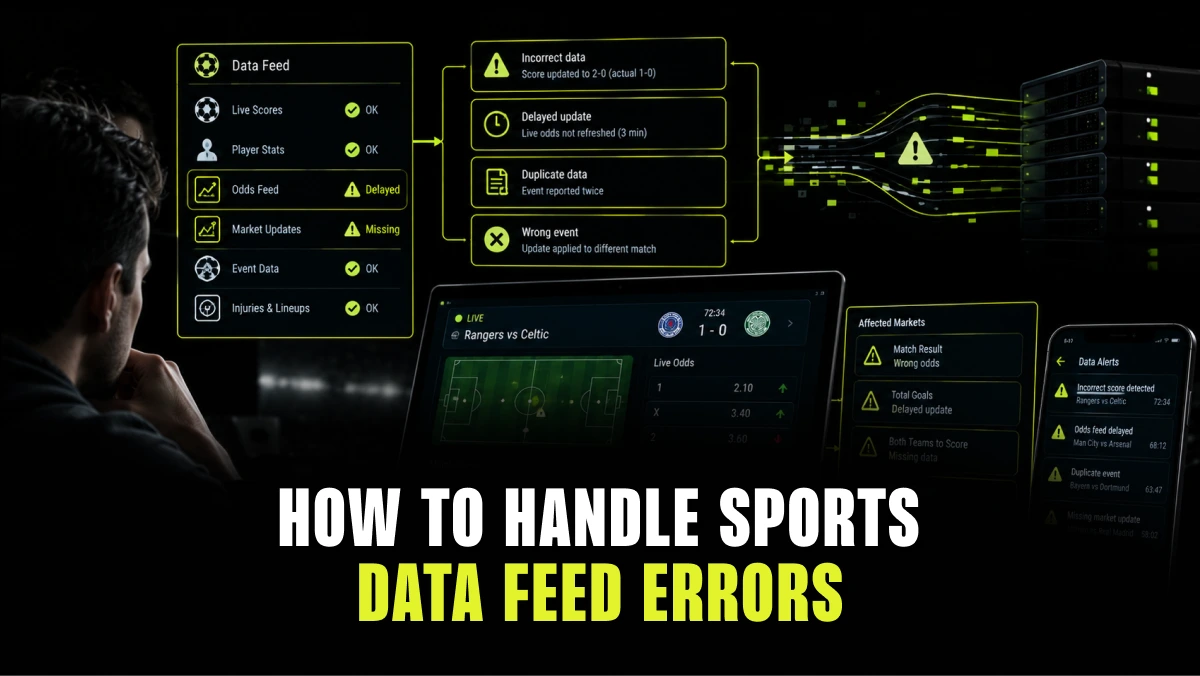
Sports data feed errors can affect what your sportsbook receives, when it receives it, or where the data ends up. The most common ones include:
1. Incorrect scores and match incidents
A feed can record the wrong score or misreport a match incident. Take a basketball three-pointer recorded as a two-pointer. The score is now one point short, so the live odds and any score-linked markets are priced on the wrong number. Similar errors occur when a tennis point is credited to the wrong player.
However, a score change isn’t necessarily a feed error. An official decision can also change after the first update, such as when VAR disallows a goal. Because an official reversal and a data error may be settled differently under your rules, your system needs to tell them apart.
2. Delayed or missing updates
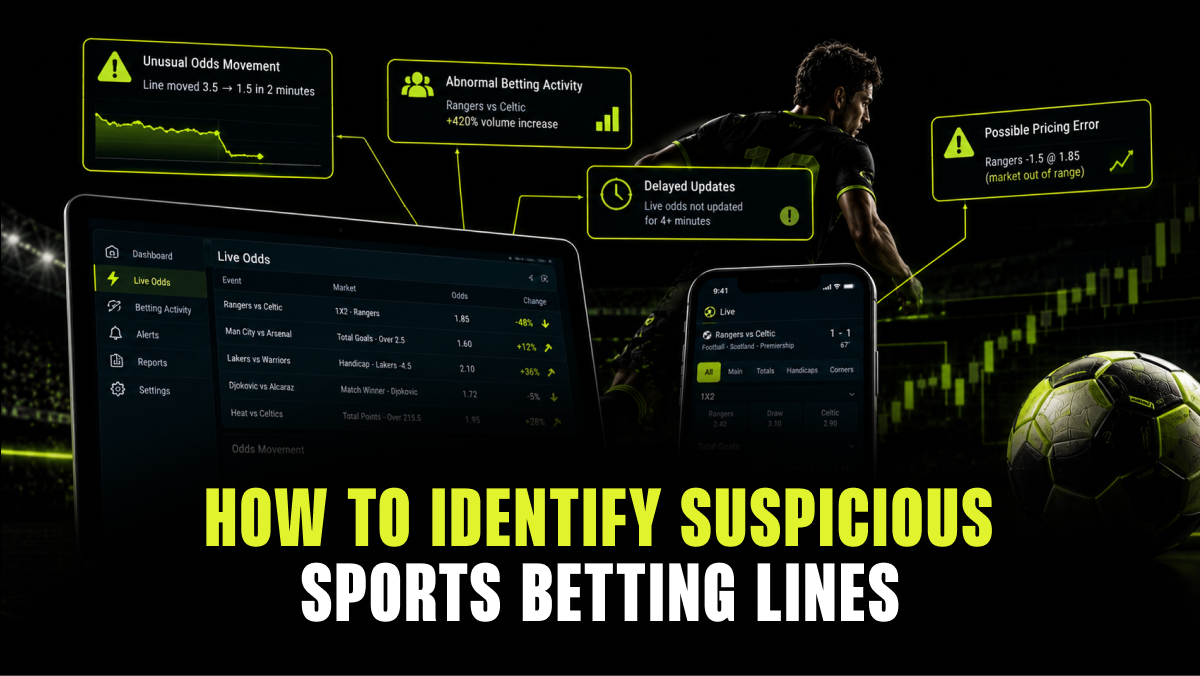
A sports data feed can deliver accurate information too late. If a goal reaches your sportsbook several seconds late, for example, your live odds could still be based on the previous score when a customer places a bet.
Some updates may never reach your platform. For example, you might receive the new score but not the goal behind it, leaving goalscorer and other incident-based markets without the data they need to settle.
3. Duplicate and out-of-order messages
Feed retries or reconnections can send the same update to your sportsbook more than once. Without duplicate checks, your system could record the same goal twice or process a settlement that has already been completed.
Updates do not always arrive in the correct order either. An older message could arrive after a correction and replace the latest score.
4. Incorrect event, participant, or market mapping
The data itself can be correct but linked to the wrong event, team, player, or betting market. For example, teams with similar names could be matched incorrectly between different data sources, causing statistics or odds to appear under the wrong fixture.
Player mapping errors can also occur when athletes share similar names or when roster information is outdated. This can cause your sportsbook to display incorrect player statistics or associate betting markets with the wrong participant.
5. Incorrect results and settlement instructions
An event score can be correct, but the result provided for a specific betting market may be wrong. The error can also come from your settlement system if it applies the wrong market rules to accurate data.
For example, a player prop could be settled using the wrong statistic, or a first-half bet could be graded using the full-time result.
How to respond to a sports data feed error
When you discover an error in your sports data feed, follow these steps to limit your exposure and settle affected bets correctly:
1. Suspend the affected markets and pause cash-out
Once you identify a possible data error, stop accepting bets on any affected markets. For example, if the live score is in doubt, suspend all score-dependent markets, such as match result, handicap, and totals.
You should also pause cash-out offers that use the incorrect data. Otherwise, customers could still accept cash-out values calculated before you corrected the error.
Make sure the suspension prevents bets from being accepted, including those already being processed. Simply removing the odds from your sportsbook interface may not stop pending bets from going through.
2. Verify the data and find the source of the error
After you suspend the affected markets, compare what your data provider sent with what appears on your sportsbook.
If the provider sent the correct score but your platform shows a different one, check how the update was processed. If the incorrect information came directly from the feed, report it to the provider with the event details and the time of the error.
A second data source can help you confirm the problem. If the two sources disagree, use the source named in your betting rules as the settlement reference.
3. Identify when the error started and which bets it affected
Find the last correct update before the error appeared. From that point, work out how long the wrong data was live and which bets were accepted, cashed out, or settled using that data.
4. Apply the correction
Now that you know what's correct, update your sportsbook with the verified data. Make sure the correction is reflected wherever the incorrect update was used, not just in the score customers see.
If the error happened because the feed disconnected, your platform could have missed other updates at the same time. Process those updates as part of the correction before you reopen the affected markets. Keep the original data in your records so you have a clear history of what changed.
5. Decide what happens to affected bets
After you identify the bets affected by the data error, decide how to handle each one. Not every bet connected to an error needs to be voided.
Here’s what you may need to do:
- Let the bet stand if the error did not affect the wager or its correct settlement.
- Resettle the bet if it was settled using incorrect data and the correct result changes the outcome.
- Void the bet if your rules require it, for example, if the bet was accepted after a goal had been scored but before the delayed update reached your sportsbook.
- Review the bet individually if it was accepted while incorrect or delayed information was available and the correct treatment is not immediately clear.
How can you reduce the impact of future feed errors?
To reduce the impact of future feed errors, you need to prepare your sportsbook to detect and handle them more effectively:
- Check for unusual changes in the data: Set your system to flag updates that do not make sense based on what has already happened in the event. For example, a sudden score change with no related match event should be checked before your sportsbook uses that information.
- Set rules for using backup data sources: Decide in advance when your sportsbook should switch to your backup feed. The two feeds also need to identify events and betting markets consistently so switching sources doesn't create a different data problem.
- Test how your system handles corrections: Simulate a provider correction for data that has already reached your sportsbook. Confirm that your platform replaces incorrect data without creating duplicate updates or leaving affected bets with incorrect results.
- Track how quickly you recover: Measure how long it takes to detect an error, correct the data, and return affected markets to normal. Keep records of affected bets and repeat incidents to identify problems that need closer attention.
How should you explain score corrections and voided bets to customers?
When a score correction changes how a bet is handled, customers need to understand what happened and how it affected their wager. Saying that a technical error occurred isn't enough, as it doesn't explain why a bet was resettled or voided.
You should:
- Explain what happened: Tell the customer which event data was corrected, such as the score or a player statistic.
- Give the final decision: Clearly state whether the bet stands or has been resettled or voided. The customer should not have to work this out from the rest of the message.
- Explain the effect on their balance: If the decision changes the customer’s payout, tell them what adjustment was made to their account and how it relates to the corrected bet.
- Show why that decision was made: Give the rule that applies to the situation and link directly to it. Pointing to a rule published before the event shows the customer that the decision wasn’t made after the fact, which makes it less likely to be disputed.
LSports: Reliable sports data for your sportsbook
LSports gives your sportsbook fast, accurate sports data and tools to manage risks that can arise during live betting. Its AI and computer vision technology collects data from public broadcast sources, while a global network of 1,000+ trained scouts reports from live events.
You can access this data through the Sports API, which delivers continuously updated and verified data across 100+ sports. Its unified structure across all sports reduces mapping work between sources, and latency-optimized delivery shortens the time your markets run on outdated information.
For live betting, Hyper Feed delivers high-speed event updates with confidence grading for each incident, which helps your trading team decide whether to adjust odds, change margins, or suspend a market.
If incorrect or delayed information creates betting exposure, DEFEND gives you the tools to manage that risk. With DEFEND, you can:
- Monitor exposure: Track betting activity and see where liability is building across your sportsbook.
- Set granular bet limits: Control stakes by sport, competition, fixture, or player based on the level of risk you are prepared to accept
- Use smart automations: Automatically adjust limits based on predefined rules while keeping your trading team in control of risk decisions.
You can also use OddService to access real-time prices from 100+ bookmakers. Comparing your odds with the wider market can help your trading team detect unusual price differences that could indicate delayed feed updates or incorrect match information.
Start your free trial today and see how LSports can help you reduce feed errors and manage the risk they create.
Preguntas frecuentes:
1. What are voided bets?
A voided bet is a wager that your sportsbook cancels and settles as neither a win nor a loss. The customer's original stake is usually returned, although the exact treatment depends on your published betting rules.
2. What happens if a sportsbook settles a bet incorrectly?
If a bet was settled using incorrect data, check its settlement against the verified result and your betting rules. You may need to resettle the wager and adjust the customer’s balance if the correction changes the outcome.
3. Can a sportsbook change a bet after it has been settled?
Yes, you can correct a settled bet if it was graded using an incorrect result or other wrong information, and your rules permit resettlement.
4. What should you look for in a sports data provider?
Look for data accuracy, latency, sports and competition coverage, update frequency, correction processes, and feed reliability. Also check how the provider collects and verifies its data, especially if you rely on the feed for live betting and settlement.
5. Why is accurate sports data important for live betting?
Live odds depend on the event's current state, so incorrect or delayed data can leave markets open at the wrong price. This can expose your sportsbook to bets placed on outdated information and increase the risk of settlement errors and payout disputes.