
HOME / BLOG

What Are Dynamic Odds in Sports Betting? A Complete Guide to Real-Time Betting

what-are-dynamic-odds-cover

Dynamic odds in sports betting are real-time adjustments made by betting platforms based on live game events, player performance, and shifting user betting patterns.


Studies show that in many markets, over 60% of wagers are placed during live play, highlighting how central in-play betting has become to modern platforms.

In this article, we will explore everything you need to know about dynamic odds so you can build more responsive, accurate, and competitive real-time betting systems.

Yoav ziv 
Subscribe To Our Blog

Key takeaways:

  • Dynamic odds change in real time based on both gameplay and betting activity

Unlike pre-game odds, dynamic odds constantly update during a match. They react instantly to things like goals, injuries, pace of play, and even how people are betting, making live betting fast and highly responsive.

  • In-game events can instantly shift betting markets

A single moment, like a key injury or sudden scoring run, can cause odds to move within seconds. This means bettors are always working with the most up-to-date view of how a game is likely to unfold.

  • Live betting increases engagement but adds operational complexity

Dynamic odds keep users active throughout the entire match, driving more bets and higher engagement. At the same time, platforms need to handle constant updates, manage volatility, and ensure everything runs smoothly in real time.

  • Speed, accuracy, and risk control define strong dynamic odds systems

The best systems stand out by reacting instantly to market changes, managing exposure during high-risk moments, and maintaining stability even during peak traffic or major in-game events.

  • Using the right data and trading platform is a competitive advantage

Solutions like LSports bring everything together in one place, from real-time data feeds to automated trading and AI risk management. This allows sportsbooks to offer fast, reliable live betting while improving profitability and control.

What are dynamic odds?

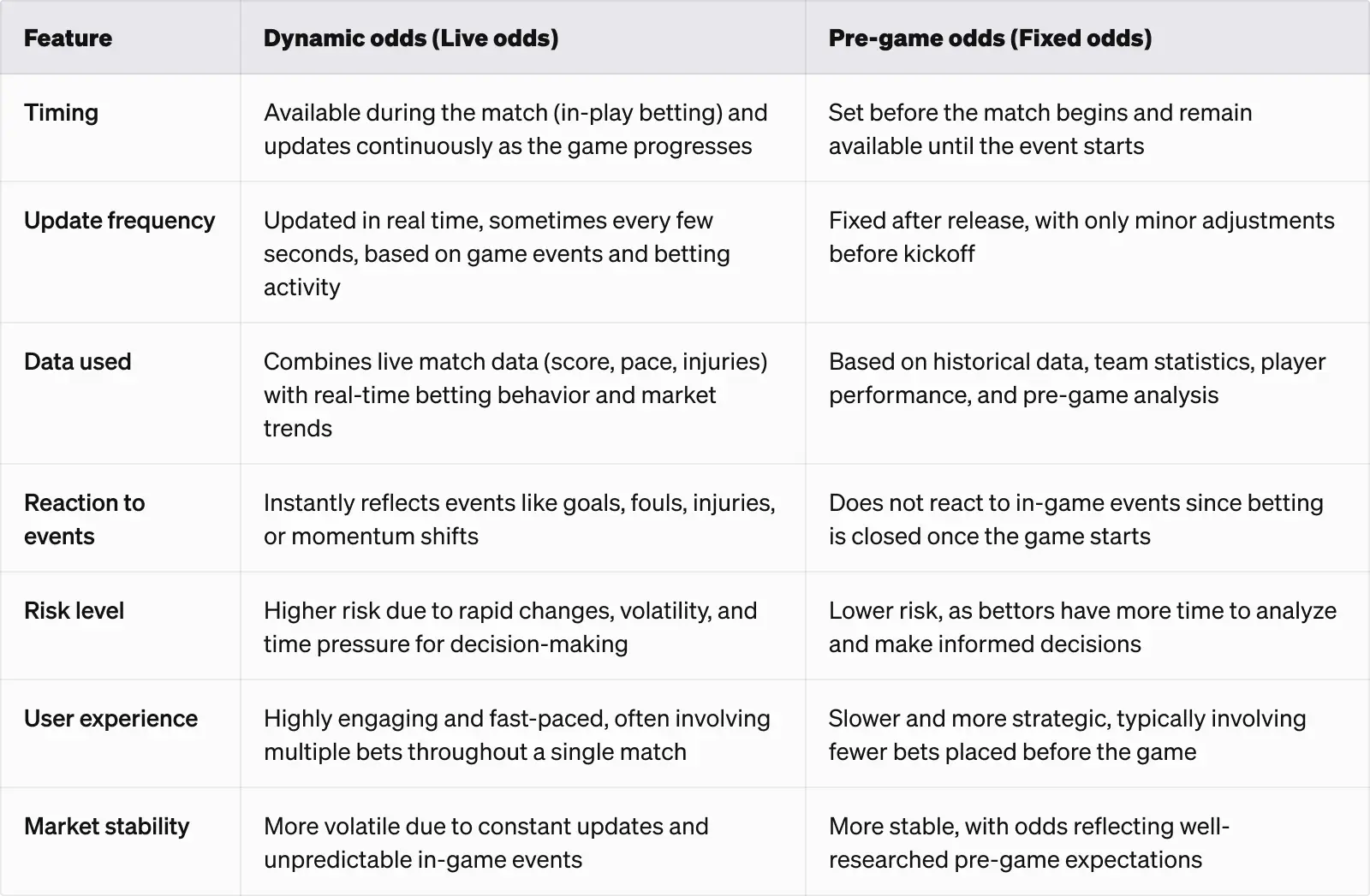
Dynamic odds are betting lines that update in real time to reflect both what’s happening in the game and how people are betting. In live (in-play) betting, these odds can shift rapidly, sometimes every few seconds, after events like goals, injuries, or large wagers. Instead of fixed pre-game lines, dynamic odds continuously adapt so every new development is immediately reflected in the market.

In the table below, you can see key differences between dynamic odds and pre-game odds:
feature-table

How do dynamic odds in sports betting work?

Take a basketball game as an example. Before tip-off, the total points line might be set at 220. As the game unfolds, both teams begin playing at a faster pace, scoring more efficiently than expected. By the third quarter, the game is trending toward 240 total points. At that stage, the odds don’t remain anchored to the pre-game line, but move upward to reflect the new scoring reality.

From a sportsbook perspective, the shift happens in a clear progression:

  • Opening line: 220 total points based on pre-game models
  • In-game data: Increased pace, higher shooting efficiency
  • Revised projection: Game trending toward ~240 points
  • Odds adjustment: Live total moves up to align with real-time performance

Now consider a high-impact event. A star player suffers an injury and leaves the game. Instantly, the balance of the matchup changes. The affected team’s probability of winning drops, and the market must react just as quickly.

In practical terms:

  • Event: Key player exits the game
  • Immediate impact: Team performance expectations decline
  • Market reaction: Win probabilities are recalculated
  • Line movement: Point spread shifts several points within seconds

What are the key components of dynamic odds pricing?

Bookmakers rely on a combination of data, advanced algorithms, and risk management tools to keep their odds both accurate and profitable. These key components include:

1. Real-time game data integration

At the core of any dynamic odds system are real-time data feeds. These streams deliver live game information directly into the sportsbook’s pricing engine. Typical data points include:

  • Current score
  • Time remaining
  • Possession and momentum indicators
  • Injuries and substitutions
  • Advanced metrics (like expected goals or player fatigue)

2. Betting behavior monitoring

Alongside game data, sportsbooks closely track how people are actually betting. This helps them spot patterns, manage risk, and adjust odds in real time. They focus on a few key signals:

  • Total betting volume: The overall amount of money being wagered
  • Bet size: Whether bets are small and casual or larger, potentially from more experienced bettors
  • Money distribution: How wagers are spread across different outcomes
  • Timing of bets: When bets are placed, as sharper bettors often act early or just before key moments

3. Risk management systems

Behind the scenes, sportsbooks rely on powerful risk management systems to keep everything under control. These tools analyze both internal data (like current liabilities) and external market signals in real time. They’re responsible for:

  • Automatic odds adjustments: Updating lines instantly as risk levels change
  • Detecting unusual activity: Flagging sharp or suspicious betting patterns
  • Dynamic betting limits: Adjusting how much users can wager on higher-risk markets

Benefits and challenges of dynamic odds in sports betting

Dynamic odds have transformed sports betting by making it more engaging and responsive, while also introducing new technical and regulatory challenges. Below are the key benefits and challenges of dynamic odds:

Benefits:

  • Higher betting volume and engagement: Live, in-play odds keep bettors engaged throughout the entire match rather than just before it starts. This continuous interaction encourages frequent micro-bets and now accounts for a large share of sportsbook revenue.
  • Improved profitability: Constant odds updates allow sportsbooks to better balance their books by adjusting prices based on betting patterns. This helps protect margins and reduces the risk of large losses from sudden shifts in bettor behavior. 
  • Enhanced risk management: Real-time adjustments enable sportsbooks to respond instantly to changing risk levels. They can suspend markets or limit bets during high-risk moments to prevent excessive exposure.

Challenges:

  • Technical complexity: Building a dynamic odds system requires fast, reliable data feeds and highly scalable infrastructure. Even minor delays or data inconsistencies can lead to incorrect odds and a poor user experience.
  • Volatility control: Rapidly changing odds require constant monitoring and intervention to prevent instability. Sportsbooks often need to suspend betting during key moments, and those suspensions must be handled quickly and fairly.
  • Regulatory and fairness concerns: Operators must ensure their odds-setting processes are transparent and comply with regulations in different regions. Dynamic pricing also makes it more difficult to implement and monitor responsible gambling measures.

How to choose the best data provider for dynamic odds in sports betting?

Choosing the right provider for dynamic odds is one of the most important decisions for any sportsbook. While many providers offer real-time data and automated pricing, the real difference lies in how well they perform under pressure, how accurately they price markets, and how much control they give operators.

how-to-choose-the-best-data-provider

Below are the key factors to evaluate when selecting a dynamic odds provider:

1. Reaction speed and latency

In live betting, speed is everything. Odds need to be updated within seconds, sometimes within milliseconds, after a game event or a surge in betting activity. Even small delays can lead to outdated prices, increased risk exposure, or missed betting opportunities.

A strong provider delivers ultra-low latency data and ensures that odds adjustments happen instantly and consistently.

2. Accuracy and data quality

Fast updates are meaningless without accurate data. The best providers combine multiple high-quality data sources, advanced models, and validation systems to ensure that odds truly reflect what’s happening in the game. Look for providers with proven reliability, broad coverage, and consistent data integrity across all supported sports and leagues.

3. Risk and exposure management

Dynamic odds environments are highly volatile, especially during key moments like goals, injuries, or sudden betting spikes. A good provider should include built-in risk management tools that:

  • Automatically adjust odds based on liability
  • Detect unusual or sharp betting patterns
  • Apply dynamic betting limits when needed

4. Control over trading operations

Full automation without control can be risky. Top providers give operators the ability to:

  • Monitor odds movements in real time
  • Override or adjust automated decisions
  • Customize trading strategies based on their risk appetite

5. System stability and scalability

Live betting generates high traffic and constant updates, especially during major events. Your provider must be able to handle:

  • Peak betting volumes without delays
  • Multiple simultaneous events and markets
  • Continuous real-time updates without system failures

6. Transparency and reporting

Understanding how odds are calculated and adjusted is essential for trust and optimization. The best providers offer clear visibility into:

  • Pricing logic and model behavior
  • Betting patterns and market trends
  • Real-time performance and risk exposure

7. Integration and ecosystem

A strong provider should not operate in isolation. Instead, it should integrate smoothly with your existing sportsbook infrastructure, including frontend platforms, payment systems, and CRM tools.

All-in-one solutions that combine data feeds, trading tools, and analytics can significantly simplify operations and improve efficiency.

Meet LSports: The complete solution for dynamic odds and live Betting

To effectively power dynamic odds, sportsbooks need a combination of real-time data, advanced algorithms, and strong risk management systems working together seamlessly. This is why solutions like LSports stand out. Instead of treating data, pricing, and risk management as separate components, LSports combines them into a single, integrated ecosystem designed specifically for real-time betting environments.

lsports-homepage

LSports is a world-leading sports data solutions provider that delivers real-time data and insights to help sportsbooks maximize profits, boost engagement, and stay competitive. It tracks every game, score, and statistic in real time, supplying accurate inputs that power dynamic odds. With near-zero latency data delivery from over 100 live sources and massive global coverage, LSports enables sportsbooks to offer fast and reliable in-play betting experiences.

The company offers extensive coverage, including over 100 sports, more than 15,000 leagues, 2,500 markets, and over 3 million fixtures, ensuring comprehensive and scalable solutions for operators worldwide.

Its key features include:

  • Arena360 platform: Arena360 is an all-in-one platform that centralizes trading, risk management, and user engagement tools in a single interface. This unified approach allows sportsbooks to manage dynamic odds more efficiently and respond instantly to live events.
  • Automated trading tools (TRADE / STM): These tools automatically adjust odds based on live data and betting activity without manual intervention. They help maintain balanced margins and ensure pricing stays accurate during fast-moving in-play betting.
  • AI-driven risk management: AI systems continuously monitor betting patterns to identify unusual or high-risk activity. When needed, they instantly adjust odds or limits to reduce exposure and protect the sportsbook.
  • Real-time performance insights: The platform provides real-time analytics and alerts on betting trends, liabilities, and market performance. This allows operators to make faster, data-driven decisions that improve odds accuracy.
  • Player engagement tools: Delivers personalized betting experiences based on user behavior and preferences. This keeps bettors active during live events and increases overall retention and betting volume.

Start your free trial with LSports today and see how dynamic odds can be managed in real time without sacrificing accuracy, speed, or control.

FAQs:

1. How fast do dynamic odds need to update to stay competitive?

The faster, the better. Leading sportsbooks update odds almost instantly, often within a second or two. Even small delays can lead to outdated prices and increased risk during fast-moving moments in a game.

2. What happens if there’s a delay or issue with live data?

If something goes wrong with the data feed, sportsbooks will usually pause betting on affected markets. This helps prevent incorrect odds from being offered until everything is back to normal.

3. Can sportsbooks step in and adjust odds manually?

Yes. Even though most odds are updated automatically, trading teams can step in when needed. This usually happens during unusual events, unexpected betting patterns, or data issues.

4. How do sportsbooks stop experienced bettors from taking advantage of live odds?

Sportsbooks monitor betting activity in real time, set limits, and use smart risk management tools to spot unusual behavior. If something looks off, they can quickly adjust odds or restrict betting.

5. Should you build your own dynamic odds system or use a provider?

Building your own system gives you full control, but it takes a lot of time, resources, and expertise. That’s why many sportsbooks choose external providers to get up and running faster with a reliable solution.


MORE blogs

Prediction Markets vs. Sportsbooks_ What're the Differences Cover

Prediction Markets vs. Sportsbooks: What Are the Differences?

Compare prediction market vs sportsbook options so you can understand pricing, liquidity, risk, regulation, and the...
6 Best Technologies to Use For Sports Fan Engagement in 2026 Cover

6 Best Technologies to Use for Sports Fan Engagement in 2026

Discover the best technologies to use for sports fan engagement so you can boost interaction, build...
How Do Sportsbooks Detect Arbitrage in 2026 Cover

How Do Sportsbooks Detect Arbitrage in 2026? [Guide]

Explore how sportsbooks detect arbitrage so you can identify betting patterns, reduce exposure, and protect your...

What Is Sports Betting? A Foundational Guide for Operators

Learn what sports betting is so you can understand how betting markets work, explore popular wager...
6 Risk Management Techniques for Prediction Markets Cover

6 Risk Management Techniques for Prediction Markets in 2026

Explore the risk management techniques for prediction markets so you can reduce exposure, protect profits, and...
Importance of Data Quality Management in Sports Analytics Cover

Data Quality Management in Sports Analytics: What to Know?

Discover the importance of data quality management in sports analytics so you can improve accuracy, reduce...

TRUSTED BY MAJOR SPORTSBOOKS 

HEAR IT FROM OUR PARTNERS​