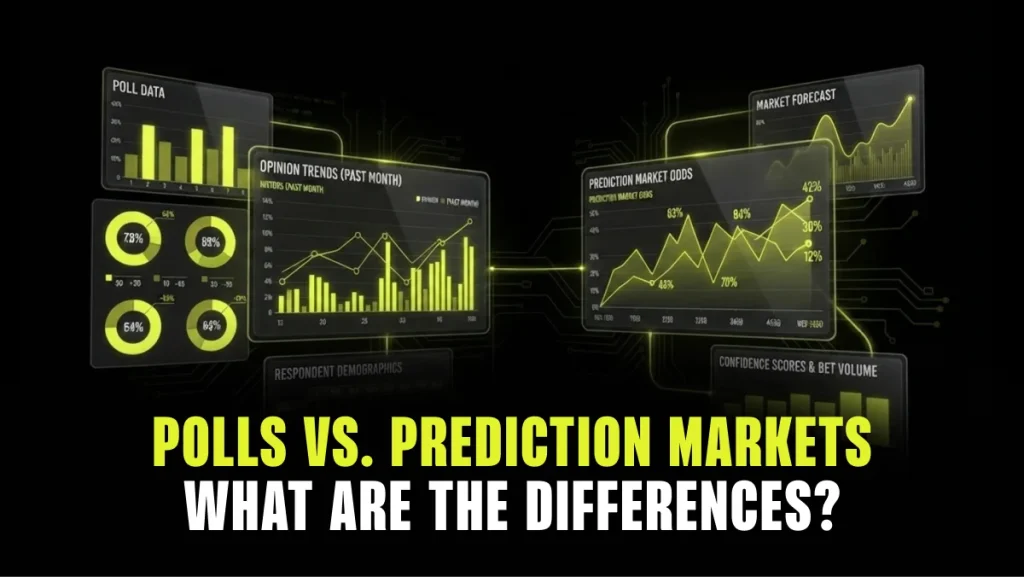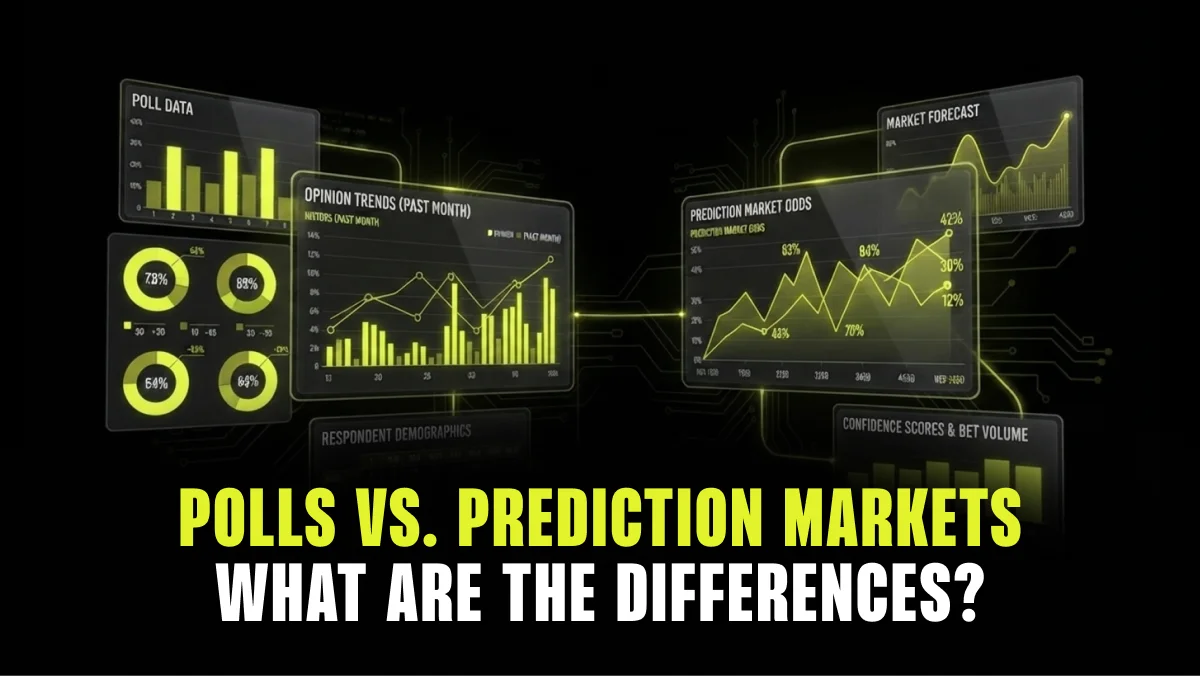

Polls reveal what people think at a specific moment, while prediction markets estimate how likely a future event is to happen based on trading activity.
Polls rely on carefully selected survey participants to represent a wider population. Prediction markets rely on traders who buy and sell contracts, with prices changing as new information becomes available.
Polls are suitable for measuring current public opinion, voter preferences, or customer sentiment. Prediction markets are better for estimating future outcomes and continuously updating expectations as events unfold.
You need reliable market data, clear contract rules, accurate pricing, automated settlement, regulatory compliance, and user education to deliver a trustworthy prediction market experience.
LSports offers a Prediction Markets Feed that provides normalized market data, real-time pricing, contract information, and settlement data through a single integration, helping you launch and manage prediction markets more efficiently.
Polls are surveys used to understand what a group of people thinks about a particular topic. Pollsters collect responses from a sample of respondents and use statistical methods to estimate the views of the wider population.

Polls are used to measure opinions on subjects like elections, public policy, consumer preferences, and social issues. Their accuracy depends on various factors, including the participants, question design, survey timing, and the overall quality of the methodology.
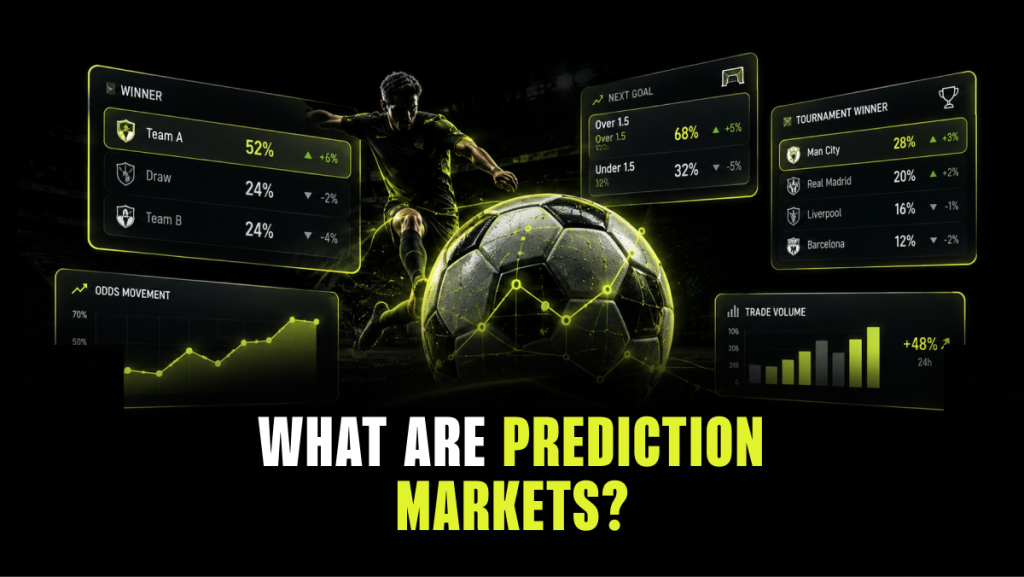
Prediction markets are platforms where participants buy and sell shares based on the probability of a future event. This can include elections, inflation, sports, entertainment, or almost anything with a clear, verifiable result. As participants trade contracts, prices change to reflect the market’s current expectations about how likely each outcome is.

For example, if a binary contract is trading at $0.60, it often signals that the market estimates a roughly 60% chance of that outcome occurring, although liquidity, fees, and spreads can influence the price.
Worth knowing:
If you want to learn what the most popular prediction market platforms offer and how they operate, check out our article 7 Best Prediction Market Platforms to Learn From in 2026.
Here are the key areas in which polls and prediction markets differ, from what they measure to how they produce results:

A poll measures people’s opinions or preferences at the time of the survey. For example, if an election poll shows that 48% of respondents support a candidate, it means that 48% of the people surveyed said they would vote for that candidate. It does not mean the candidate has a 48% chance of winning the election.
A prediction market measures what traders believe is most likely to happen. Instead of asking who they support, participants buy and sell contracts based on the outcome they expect. As trading continues, prices change to reflect the market’s current view of how likely each outcome is.
Polls aim to represent a specific group of people, such as registered voters or likely voters. That’s why pollsters carefully select participants and use statistical methods to make the results better reflect the wider population.
Prediction markets are open to people who choose to trade. Participants don’t need to represent the general public, and some traders may buy and sell far more contracts than others. As a result, experienced or highly active traders can have a bigger influence on market prices.
People answering a poll usually have no financial stake in their responses. They share their opinion, preference, or intention, and they do not gain or lose money based on what eventually happens.
Prediction market participants trade with their own money. If they predict the outcome correctly, they can make a profit. If they are wrong, they can lose money. That is why traders are motivated to act on what they believe is most likely to happen, even if it doesn’t match their personal preferences.
Polls take time to complete. Responses are collected over several days, then analyzed before the results are published. This means a poll often reflects opinions from days before it is released.
Prediction markets update quickly. When new information becomes available, such as an economic report, election debate, or major news event, traders can immediately buy or sell contracts, causing prices to change while the market is open.
Prediction markets often reflect changing expectations in real time, while polls provide a snapshot of public opinion at a specific point in time.
The accuracy of a poll depends largely on its methodology. Results can be affected by who is surveyed, how participants are selected, how questions are worded, and how the responses are analyzed and weighted. If the methodology is weak, the results may not accurately represent the wider population.
Prediction market accuracy depends more on the quality of the market itself. Factors such as liquidity, the number of active traders, trading limits, fees, and the speed at which new information is reflected in prices can all influence how accurately the market represents expectations.
A poll records opinions at a moment in time. There’s no right or wrong answer, and the result reflects sentiment rather than fact. Accuracy is judged by how well the sample represents the wider population.
Prediction markets are different: Every market must be based on a clearly defined future event with a measurable outcome. The rules must explain exactly what counts as a winning result, when the market will be settled, and which official source will determine the outcome.
Prediction markets and polls measure different things, so one isn’t more accurate than the other by default. Which performs better depends on the event, the quality of the poll or market, and the measurement subject.
Polls are better for:
Prediction markets are better for:
The difference between polls and prediction markets matters commercially, because one of the two is now a product you can sell. Prediction markets have moved from academic forecasting tools into regulated consumer platforms. Customers who already bet on sports are trading contracts on elections, economic data, and entertainment outcomes on the same phone.
For sportsbooks, that is both a threat and an opening. Prediction market platforms compete for the same wallet, especially when the sporting calendar goes quiet, but adding them to your offering keeps users on-site year-round.
The catch is that prediction markets aren’t just new event categories. Pricing models, contract rules, and settlement requirements all differ from sports betting. Launching them successfully requires you to:
LSports’ Prediction Markets Feed aggregates odds, futures contracts, contract rules, and settlement data from leading exchanges into one integration, so you don’t have to connect to each one separately. Everything arrives in a unified betting format, making prediction markets easier to launch and manage.
Here’s what you get with the Prediction Markets Feed:
Request a demo today and see how quickly your sportsbook can go live with prediction markets.
No. Prediction markets estimate the likelihood of future events, but they cannot guarantee the correct result. Unexpected events, limited liquidity, or changing information can all lead to outcomes that differ from what the market previously expected.
Not necessarily. Some providers aggregate and standardize data from multiple market exchanges into a single feed, allowing you to avoid building and maintaining multiple integrations.
The main challenges include sourcing reliable market data, standardizing contract information, handling real-time price updates, automating settlement, complying with regulations, and educating users on how prediction markets differ from sportsbook betting.
Interest varies by region, but elections, cryptocurrencies, financial indicators, major sporting events, entertainment awards, and technology announcements are among the most actively traded categories.
Liquidity directly affects how easily users can buy or sell contracts and how accurately prices reflect market expectations. Markets with stronger liquidity generally provide tighter pricing and a better trading experience.
Yes. Every prediction market contract must include clearly defined settlement conditions, an official source of resolution, and a predetermined expiration time. These rules are typically more standardized than those used for many sportsbook markets.