2026年7月29日
2026年如何创建博彩网站?[分步指南]
博彩网站是一个在线平台,用户可以在该平台上对体育赛事、赌场游戏或其他结果进行投注,以赢取真金白银或奖品。 如果您正在考虑创办一个博彩网站,需要考虑的因素有很多。从法律法规和牌照申请,到平台开发、支付系统以及用户安全,您必须仔细规划每一个细节,以确保为用户提供安全可靠的体验。本文将向您介绍如何通过六个步骤创建一个博彩网站,助您充满信心地推出并发展自己的平台。


在本文中
订阅
保持领先地位
获取有关体育数据、博彩趋势和行业新闻的最新见解——直接发送到您的收件箱。
这是一个标题
要点总结
- Core features define success
A strong betting site is built on essentials such as real-time odds, smooth bet placement, multiple payment options, and strong security. Features like live streaming, crypto support, and social interaction go further by increasing engagement and keeping users on your platform longer.
- Your business model shapes everything
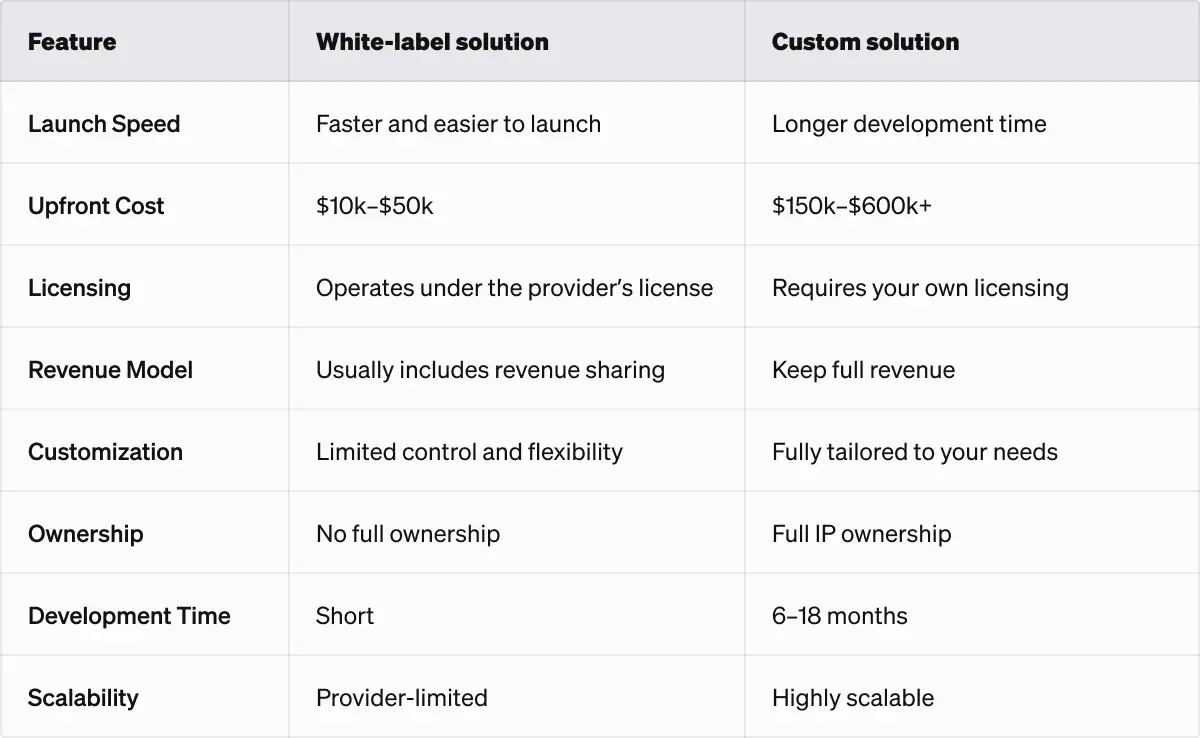
Choosing between a white-label and custom solution impacts cost, speed, and control. White-label gets you to market faster with lower upfront investment, while custom builds offer full ownership and scalability but require more time and capital.
- Compliance and trust are non-negotiable
Licensing, KYC, AML, and responsible gambling tools are not optional. They protect your business from legal risk and build user confidence. Skipping or mishandling this step can shut your platform down before it even grows.
- Reliable data is the real competitive edge
Even the best-designed platform fails without fast, accurate sports data. Real-time odds and updates drive user trust and in-play betting. Solutions like LSports give you access to high-quality, low-latency data and analytics, making them a smart investment for running a competitive, scalable betting platform.
Essential features for a modern betting site
The difference between an average betting site and a great one usually comes down to a few core features. Get these right, and everything else falls into place:
- Bet placement and odds display: A betting site needs to make placing bets simple and intuitive while offering a wide range of sports, leagues, and events to keep users interested. Odds should be clearly displayed in different formats and updated in real time using reliable data providers.
- Live streaming or broadcasting: Live streaming keeps users on your platform longer by letting them watch events without switching to another platform. It also boosts in-play betting, but you’ll need the proper rights and must follow regional broadcasting rules.
- Cryptocurrency support: Crypto payments are becoming more common, giving users faster transactions and more flexibility. Supporting options like Bitcoin or Ethereum can attract a wider audience, but you still need to follow AML and KYC regulations.
- Community and social features: Adding social features helps turn your platform into more than just a betting platform. When users can chat, share tips, or discuss games, they’re more likely to stay engaged and come back.
- Help and guidance: Not everyone using your site will know how betting works, so clear guidance matters. Simple tutorials and explanations can make the experience less intimidating and reduce the need for support.
- Multiple payment methods: Users expect to deposit and withdraw money in ways that suit them, from cards to e-wallets and crypto. Offering multiple secure options and supporting different currencies makes your platform more accessible globally.
- Security and privacy measures: You must keep user data secure. Strong encryption, secure payment systems, and extra layers like two-factor authentication help build trust and protect against threats.
- Responsible gambling tools: Responsible gambling features are a must for any modern platform. Tools like deposit limits, self-exclusion, and time-outs help users stay in control and meet regulatory requirements.
🏆 Worth knowing: Check out our detailed guide on 26 must-have sportsbook platform features for operators to see what sets top platforms apart.
How to make a betting site in 6 steps
Building a betting platform requires careful planning, regulatory awareness, and the right technical approach. Here’s a step-by-step breakdown of how to do it:
Step 1: Market research and choosing the business model
Start by getting a clear picture of your target market. Identify which sports, leagues, or casino games your audience is most interested in. Look into user demographics and analyze your competitors to see what they’re doing well, and where there’s room to stand out. To validate your idea, consider running surveys or questionnaires. This helps you make informed, data-driven decisions instead of relying on assumptions.
At this stage, you should also define the core direction of your platform:
- Will you focus on sports betting, casino games, or a mix of both?
- Which regions do you want to serve? (Keep in mind that each country has its own regulations and licensing requirements.)
With this foundation in place, you can move on to choosing the right business model. Your business model will shape your costs, timeline, and level of control, so it’s important to get it right from the start. The two main approaches are:
Step 2: Verify legal compliance and secure licensing
Licensing is a critical part of launching a betting platform, as you can’t operate legally without it. Start by choosing the jurisdiction where you’ll base your operations, then identify the licenses required for that region. For example:
- The United Kingdom (UKGC): Offers multiple license types and requires strict identity verification, financial transparency, and responsible gambling policies.
- United States: Licensing is handled on a state-by-state basis, with costs ranging from $100,000 to $10 million depending on the jurisdiction.
- Malta: Requires a €5,000 non-refundable fee and thorough background checks, making it a reputable but more demanding option.
- Curaçao and Anjouan: Provide more affordable and faster licensing, though they may not be supported by all payment providers.
To apply for a license, you’ll typically need:
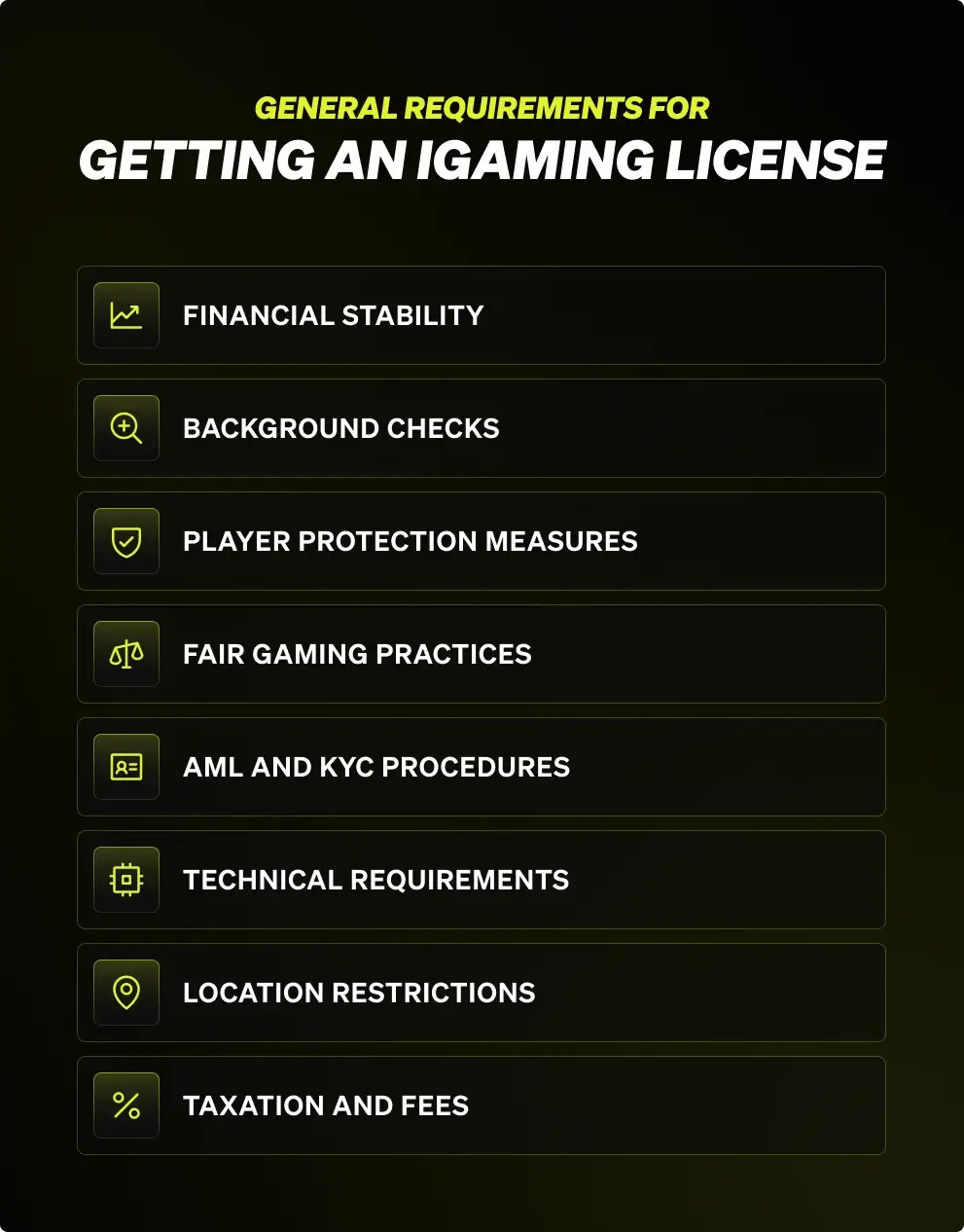
It’s strongly recommended to work with a gaming law attorney to be sure everything is accurate and compliant. Failing to meet regulatory requirements can result in heavy fines, license revocation, or even criminal penalties.
Step 3: Design the user interface and user experience (UI/UX)
Once you understand your market and regulatory requirements, the next step is to design how your platform looks and feels. Work with UI/UX designers to create wireframes and prototypes that map out the user journey.
- User Interface (UI) – Focuses on the visual side of your platform, including colors, typography, logos, and overall branding to create a consistent and appealing look.
- User Experience (UX) – Ensures the platform is easy to use, with smooth navigation and simple processes for registration, deposits, placing bets, and withdrawals.

A smooth user experience is essential for player retention. According to a 2023 Betting Hero survey, 44% of US bettors said they would delete or abandon a betting app if it was glitchy or non-responsive. Simple registration forms and quick access to betting options can significantly reduce drop-offs and improve retention.
Since 92.26% of bets are placed through mobile devices, your platform must be fully responsive and optimized for smaller screens. Finally, use prototypes and user testing to refine the experience, ensuring accessibility and alignment with WCAG standards.
Step 4: Build the platform and integrate core services
At this stage, your product starts to come to life. Developers take the approved designs and turn them into a fully functional sportsbook platform. A key decision here is choosing a technology stack that can handle growth, maintain strong performance under load, and meet strict security requirements.
Most modern sportsbooks rely on a microservices architecture, which allows different parts of the system, like the odds engine or payment processing, to run independently. This makes it much easier to scale specific components as demand increases, without affecting the entire platform.
Below are the essential components that need to be developed and integrated:
- Odds engine: This is the backbone of your sportsbook. In most cases, it integrates third-party odds providers (such as LSports or Sportradar) to deliver real-time odds, scores, and market updates. Your platform can then apply margin adjustments and business rules to these feeds. A reliable odds setup ensures accuracy, competitiveness, and fast updates during live events.
- Bet validation system: Responsible for handling large volumes of simultaneous bets, this system checks whether each bet is valid, locks in odds at the right moment, and manages the settlement process once events conclude. Speed and reliability are critical here to avoid disputes.
- Player account management (PAM): This module manages all user-related data, including registration details, KYC (Know Your Customer) verification, account balances, and transaction history. It also controls wallets and ensures compliance with regulatory requirements.
- Risk and fraud management: A sophisticated layer that monitors user behavior and transactions. It typically uses AI and rule-based systems to detect issues like bonus abuse, match-fixing patterns, or suspicious betting activity. Features like multi-factor authentication and real-time transaction monitoring add extra protection.
- Payment gateway integration: Enables deposits and withdrawals through multiple payment methods (cards, e-wallets, crypto, etc.) and currencies. Your system must comply with standards like PCI DSS to safely handle financial data.
- Data feeds integration: Connects your platform to real-time sports data providers for odds, scores, and event updates. High-quality feeds are essential for live betting and user trust. Expect to budget roughly $10,000–$50,000 per month for reliable, low-latency data services.
In addition to these core systems, developers will also build:
- Front-end applications for web and mobile, ensuring a smooth and responsive user experience
- Admin dashboards for managing content, users, risk settings, and performance analytics
- APIs and third-party integrations for tools like affiliate tracking, CRM systems, and marketing platforms
Finally, if you plan to operate in multiple regions, this is the stage to incorporate localization, including support for different languages, currencies, and regional compliance requirements.
Step 5: Test everything (QA and security checks)
Before you launch your betting site, this is where you slow down and make sure everything actually works the way it should. No matter how well something is built, there will always be bugs, edge cases, or weak spots. You need QA specialists to run a series of structured tests to validate both functionality and overall system performance:
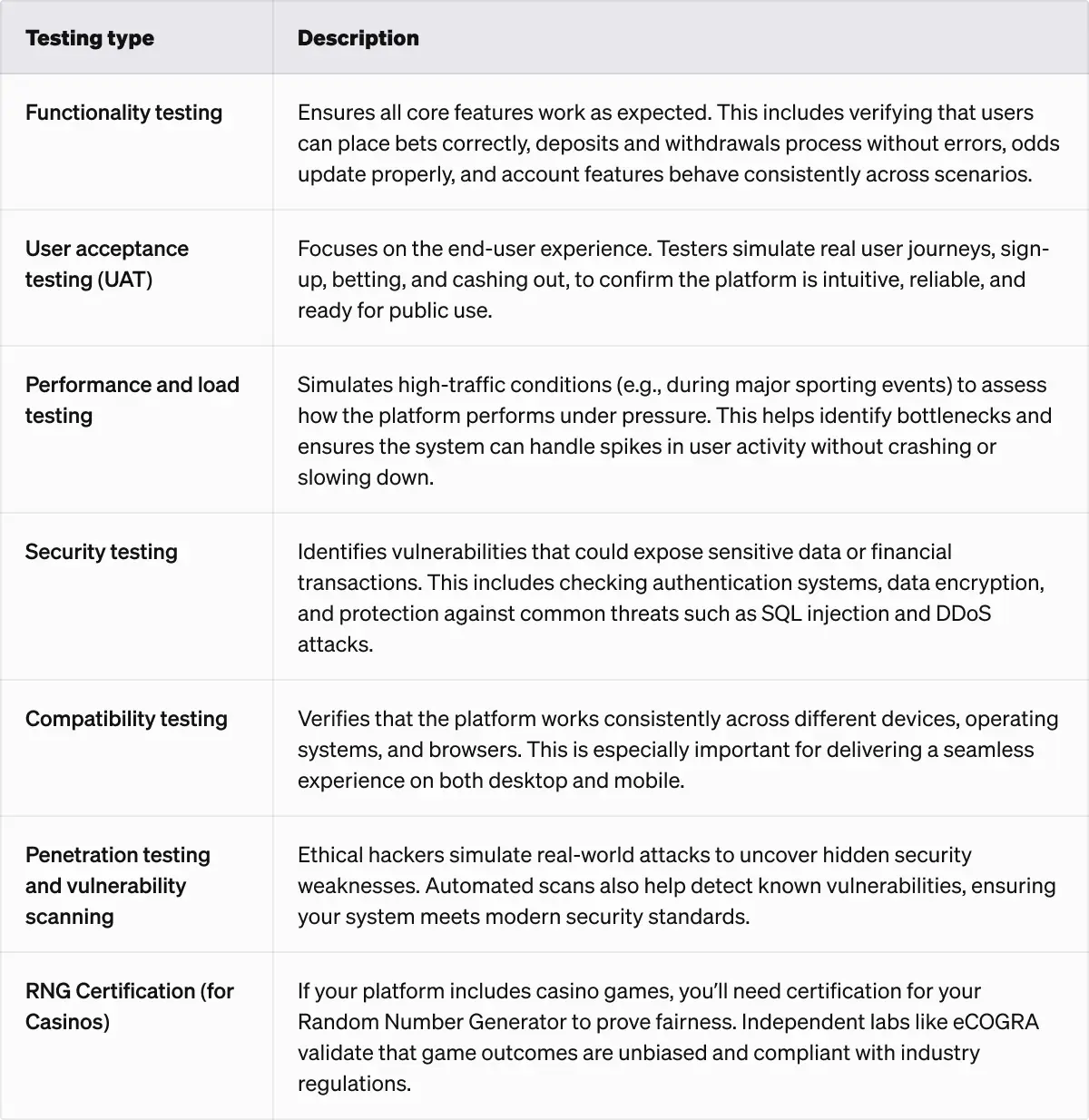
QA should also cover responsible gambling features, which are critical for compliance and user protection:
- Confirm that deposit limits can be set and enforced correctly
- Ensure self-exclusion tools work reliably and restrict access when activated
- Test affordability checks to verify they trigger under the right conditions
It can be tempting to rush through this stage just to get the product out the door, but that usually backfires. Taking the time to resolve these issues thoroughly makes a huge difference. In the end, a stable, secure, and polished platform is what sets you up for a smooth launch and avoids bigger problems later on.
Step 6: Launch your platform and keep it running smoothly
Once testing is complete and everything’s stable, you’re ready to go live. Most operators take a more controlled approach by starting with a soft launch (a limited release to a smaller audience) before rolling things out fully. This gives you a chance to see how the platform performs in a real-world setting, gather feedback, and fix any last-minute issues without too much pressure. Once you’re confident everything is running as it should, you move into a full launch.
After going live, the focus shifts quickly to growth and user acquisition. This usually includes:
- Improving your visibility through search engines (SEO)
- Running compliant advertising campaigns
- Setting up referral systems or affiliate partnerships to bring in new users
- Tracking performance and user feedback
Power your platform with high-quality sports data
Even the best-designed betting platform with smooth UX, modern features, and strong security won’t perform well without accurate, real-time data behind it. Odds, live updates, and in-play betting all depend on fast and reliable data feeds, and without them, user trust and engagement quickly drop. This is where LSports can make a difference.

LSports is a global leader in sports data solutions, delivering high-quality data and actionable insights that help sportsbooks increase profitability, improve player engagement, and stay competitive. Its data is aggregated from 100+ live feeds and delivered with near-zero latency, ensuring your platform stays responsive even during high-demand live events. Beyond major leagues, LSports also covers lower-tier and regional competitions, giving you a broader betting offering that can attract and retain more users. Its extensive coverage includes:
- 100多项体育项目
- 15,000多海里
- 2,500个市场
- 3 million fixtures
With its ARENA360 platform, LSports brings together real-time data, AI-powered tools, and advanced analytics in one place. This makes it easier to manage your sportsbook operations, optimize odds and risk strategies, and grow your platform with confidence.
Start your free trial today and power your platform with real-time sports data, advanced analytics, and risk management tools to build a fast, reliable, and competitive betting site.
常见问题解答
1. How do betting platforms attract and retain users after launch?
They use strategies like welcome bonuses, loyalty programs, personalized offers, and gamification to keep users engaged. Strong UX, fast payouts, and data-driven marketing also help maintain long-term retention.
2. What are the ongoing operational costs of running a betting site?
Running a betting site involves recurring costs, including data feeds, hosting, payment processing, support teams, and marketing. These expenses can add up to tens or even hundreds of thousands per month, depending on scale.