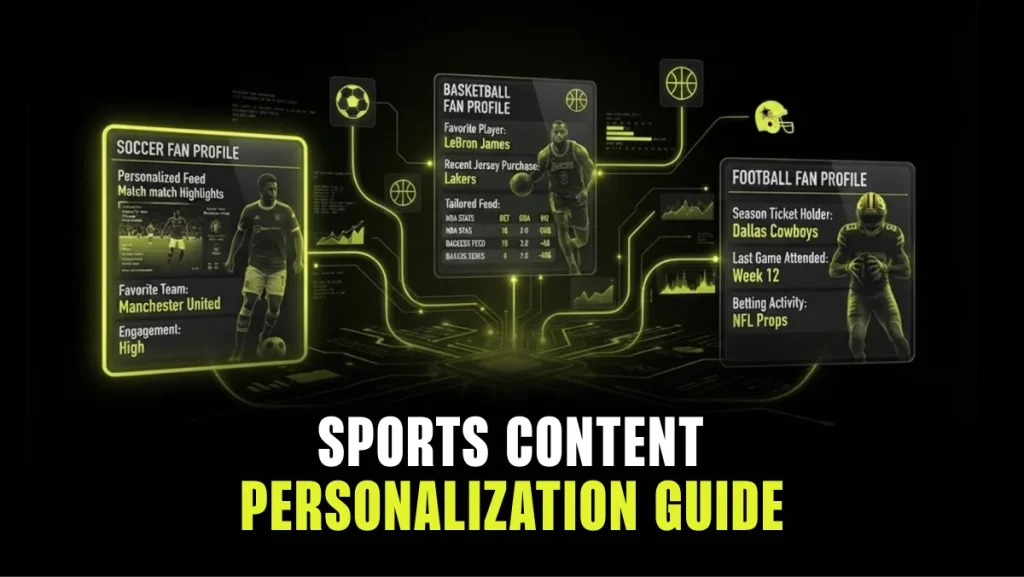

Not every user follows the same sports, teams, or betting markets. Personalizing your sportsbook helps each bettor quickly find the events, promotions, and betting opportunities that fit their interests.
Don’t rely only on betting history. Combine browsing activity, searches, favorite teams, previous bets, and recent interactions to build a clearer picture of each user’s interests and deliver better recommendations.
Bettors’ preferences tend to change, so you can’t show the same sports and markets over and over again. You need to update recommendations based on recent activity and current live events.
Personalization shouldn’t hinder discovery. While it’s important to prioritize relevant content, you should also introduce users to new events, markets, and promotions they might enjoy.
Even the best personalization strategy depends on accurate, real-time sports data. LSports combines broad sports coverage, low-latency data, and engagement tools to help you deliver better experiences and keep bettors coming back.
Sports content personalization is the process of tailoring your content to each user’s interests, preferences, and behavior. Instead of showing every bettor the same events, markets, promotions, and recommendations, the platform prioritizes the content that is most useful to them based on factors such as:
Effective personalization continuously analyzes these signals to determine what each user is most likely to engage with at any given moment.
For example, a user who usually bets on Premier League matches may normally see English football featured first on the homepage. However, if their favorite team is playing in a live Champions League match, that event should temporarily become the highest-priority recommendation.
Almost every part of your sportsbook can be personalized. However, you don’t need to personalize everything at once. Start with a few high-impact areas and expand as you collect more data.
Some of the most common content types to personalize include:

Sports content personalization involves several steps, including understanding your users, ranking content, and complying with regulatory restrictions. Here is what you need to do:
The first step is to understand what each bettor is actually interested in. You achieve that by analyzing the first-party data your sportsbook already collects.
Useful signals include:
Signals need to be interpreted carefully.
For example, if someone opens an NBA match once, it doesn’t necessarily mean they want to see basketball recommended everywhere. But if they start regularly searching for NBA teams, browsing basketball markets, and placing NBA bets over several weeks, that’s a strong indication that basketball has become one of their main interests.
Once you’ve collected user signals, the next step is to turn them into customer profiles that your personalization system can use to make recommendations.
Instead of placing someone into a broad category like “football bettor,” build a profile that reflects their actual interests and betting habits. For example, a user might regularly follow the Premier League, occasionally bet on the Champions League, prefer live betting, and often choose player prop markets.
Keep in mind that a bettor can belong to several interest groups at the same time, and those interests can change over time.
Knowing that a bettor likes Liverpool is only useful if your system can reliably link that preference to Liverpool fixtures, competitions, markets, results, and related content. That requires properly structured sports data.
Your data needs consistent identifiers and relationships across information such as:
This is particularly important when content comes from different parts of your technology stack. If your user profile, odds feed, statistics provider, and content system identify the same competition differently, personalization becomes harder to automate accurately.
Once you’ve built a customer profile and connected it to your sports data, your system can decide which content deserves the most visibility.
Imagine there are 200 upcoming events available to a bettor. Rather than displaying them in a fixed order, your personalization system can rank them by relevance to that specific user.
The highest-ranked events, markets, promotions, and recommendations can then be placed in the most prominent positions across your platform, such as the homepage, event carousels, or recommendation modules.
Relevance should never override compliance or ethical practices. A recommendation can fit a bettor’s interests perfectly and still be something they aren’t allowed to see, so every suggestion has to clear a few checks before it surfaces:
For example, a promotion might match a bettor’s interests but be unavailable due to their location or account status. In that case, it should be excluded from the recommendations.
Personalizing content is much more difficult when someone has just signed up and you know very little about their interests. This is known as the cold-start problem.
Until you collect enough first-party data, you can rely on broader signals to decide what content to show. These might include:
You can also ask users what they’re interested in. Letting them choose their favorite sports, teams, or leagues during onboarding gives you a useful starting point before any browsing or betting history becomes available.
As users interact with your sportsbook, you can gradually rely less on these general signals and more on their actual behavior to deliver personalized recommendations.
Most sportsbooks start with rule-based personalization and gradually introduce AI as the number of users, events, markets, and personalization opportunities grows.

Even a well-designed personalization strategy can hurt the user experience if it’s based on poor data or weak decision-making. Here are some of the most common mistakes to avoid:
Building an effective personalization strategy requires more than just customer data. To recommend the right events, markets, promotions, and content, your sportsbook also needs accurate, structured sports data and engagement tools that can turn those insights into personalized experiences.
LSports is a global leader in sports data solutions, helping you deliver more relevant betting experiences through high-quality sports data, extensive competition coverage, and engagement products. With data sourced from 100+ live feeds and delivered with near-zero latency, you can personalize content using reliable, real-time information. LSports’ data portfolio includes:
Unlike many providers that focus primarily on major competitions, LSports also covers lower-tier, regional, and local leagues. This gives you more opportunities to recommend events that match local audience preferences and individual betting interests, rather than limiting recommendations to the most popular competitions.
In addition to sports data, LSports offers ARENA360, an integrated platform that helps you manage trading, player engagement, and daily sportsbook operations from one place. Its set of engagement-focused tools includes:
Request a demo today and see how LSports can help you deliver more personalized content for each bettor.
The timeline depends on the amount of user data available and the way personalization is implemented. Rule-based personalization can improve the user experience almost immediately, while AI-driven systems typically become more effective over time, as they collect more first-party data and learn from user behavior.
Success is typically measured through engagement and business metrics such as click-through rate, time spent in the sportsbook, event and market views, live betting activity, promotion engagement, retention, and conversion rates.
Yes. If user profiles are linked across devices, bettors can receive consistent recommendations whether they access the sportsbook on desktop, in the mobile app, or in the mobile browser.
No. Every customer can benefit from a more relevant experience. Personalizing content for casual bettors is equally beneficial for revenue, and it can improve engagement and retention just as much as it can for high-value players.