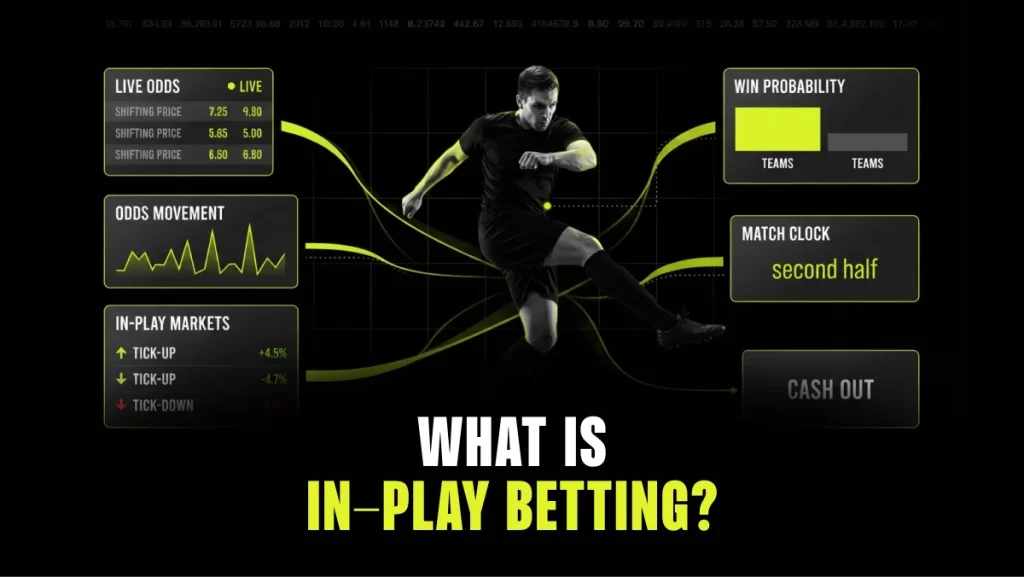
Live wagering accounts for the majority of betting volume. Pairing granular in-play markets with community features like live chat and peer betting turns each event into a longer, more interactive session.
Machine learning reshapes event feeds, generates tailored bet suggestions, and adapts stake recommendations to individual behavior. AI chat assistants extend this by surfacing relevant markets and guiding players through features.
Integrated stats and visual tools reduce the need to research using external tools. Gamification and incentives stimulate in-play betting, motivate repeat visits, and reward loyalty.
Even the best features fail if the platform frustrates or confuses in any way. Fast settlement, responsive support, and thoughtful notifications are necessary to ensure consistent engagement.
LSports provides operators with infrastructure to turn engagement tactics into measurable results, including close-to-zero latency feeds and interactive widgets like Score Frame and Live Match Pro.
Here are 13 ways to encourage your bettors to play for longer:

Today, live betting dominates wagering volumes globally, and players expect to bet while watching.
In-play markets keep users active for the full duration of a match. Microbetting takes this further by offering markets on individual moments, such as next corner kicks, points in tennis, or pitch outcomes.
Each micro-market creates a decision point that resets the player’s attention and extends session time. The key requirement is ultra-low-latency data. If odds lag behind the action by even a second, the experience breaks and exposure spikes.

Integrating social mechanics and community into the sportsbook keeps players engaged between bets. Players who feel part of a group are more attached to the platform and return to it more often. Here are some feature examples:
Studies suggest that 44% of players check data analytics before events, and 42% do so outside the platform. Embedding standings, head-to-head records, player statistics, and form analysis directly into the sportsbook keeps research on-platform and shortens the path to a bet slip.
Visualization turns this data into something players want to interact with. Animated play-by-play trackers, heatmaps, and live dashboards showing possession shifts or serve percentages hold attention far longer than static tables.
A player who favors small national events should not see the same homepage feed as the one who prefers the big league. Artificial intelligence can help in this regard. Models can now:
Personalization turns a generic platform into one that feels purpose-built for each user. That reduces the distance from landing to bet placement, and raises both bet frequency and session depth across the user base.
A chatbot that resolves simple issues, explains platform features, and answers industry questions keeps players moving instead of waiting in a support queue. It can also offer personalized tips, surface promotions, and suggest markets mid-session.
For less experienced bettors, the assistant builds confidence and encourages exploration of unfamiliar bet types. With users spread across time zones, 24/7 availability without staffing overhead makes AI chat one of the fastest engagement wins available.
Localization means adapting language, currency, popular sports, payment methods, and communication tone to each market. Each market is specific, so a bettor in Brazil will naturally expect a different experience than one in Germany. Tailored experiences broaden your reach and attract international players.
Multilingual content, in particular, improves SEO performance, driving organic acquisition in new regions. Machine translation has improved, but it still can’t match human translators, who understand the betting context and nuance.

Gamification features, such as leaderboards, achievement badges, points systems, and live activations, give players reasons to engage beyond specific matches. These mechanics tap into the same competitive instincts that make sport itself compelling.
Live contest-style activations are particularly effective. Trivia, predictions, and quizzes running alongside an event keep players’ attention active during natural breaks in the action.
Points and rewards for participation turn passive viewers into engaged participants. That conversion drives in-play volume without requiring additional promotional spend. Players mid-way through a points challenge or competing on a leaderboard also have a direct, concrete reason to log back in.
Players expect instant resolution, especially mid-bet. An unresolved issue can spiral into a lost player within minutes. Live chat enables users to skip ticket queues and get help before frustration sets in.
Support quality feeds into platform perception over time. Players who have been helped efficiently during a problem are more likely to trust the platform in future sessions.
It’s also important to act on feedback to improve the user experience and prevent issues going forward.
The first session sets the stage for all that follow. If new players cannot quickly understand what markets are available, how bet construction works, or why the platform is worth their time, they leave.
Effective onboarding is functional and fast.
For starters, keeping instructions concise and balancing text with visuals ensures onboarding feels intuitive rather than burdensome. Guided tooltips on features and a clear path from event selection to bet slip confirmation can help bettors quickly make the most of your platform.
Additionally, exclusive limited-time offers during onboarding raise the probability of an initial bet.
Incentives reward players for specific actions or long-term participation, and they may look like:
These effectively increase player engagement, but only when they are relevant. You should use customer data to time and tailor incentives around specific events, streaks, or player activity.
A tennis bettor who hasn’t logged in for a week might respond to a free bet on an upcoming Grand Slam. In contrast, a high-volume soccer bettor might value enhanced odds on a Champions League fixture.
Push notifications re-engage dormant players, but the line between useful and intrusive is narrow. Operators who over-notify find players disabling alerts entirely.
The content and timing matter equally. A notification landing outside a player’s active hours can be disruptive. Instead of generic messaging that pressures players into action, provide encouraging words that remind them of what they value.
A static platform loses players to innovative and tech-forward competitors. Players who have explored the available markets and found nothing new have few reasons to extend their sessions. Regular updates, such as new sports and leagues, expanded market types, or feature releases, give active players fresh ground to cover and attract new types of users.
Platform quality is the foundation on which everything else depends. If a player can’t navigate the interface or encounters lag, they won’t stay on the platform, let alone buy any of the engagement tactics you set in place.
Fast settlement, reliable real-time data, intuitive structure, and consistent performance under peak load are baseline expectations of the modern bettor.
Engagement tactics are only as strong as the data and tools behind them.
LSports gives operators both.
An independent provider, LSports collects data via a scouting network, AI, and computer vision, thus freeing operators from monopoly-priced feeds that limit flexibility and drain margins. That also allows it to deliver record-breaking data speed and coverage spanning 100+ sports, 15,000+ leagues, and 2,500 markets.
Besides the basics, LSports offers ARENA360, an all-in-one platform with a dedicated toolkit built to increase session time, bet frequency, and player retention:
ARENA360 also consolidates trading, risk management, and analytics into one environment:
For operators seeking full capability without operational lift, LSports’ Managed Trade Service handles day-to-day ARENA360 management.
Sign up for a free trial and see how LSports caters to sportsbooks and bettors alike.

Player engagement measures how much users interact with a sportsbook through session duration, bets per visit, and feature usage. It differs from player retention, which tracks whether a player returns at all. Engagement focuses on the depth of each visit, not whether the visit happens.
Define what you want to improve, then select matching metrics. For example:
Dividing DAU by MAU produces a stickiness ratio that shows how habit-forming the platform is.
Additionally, you can track individual player engagement with metrics like session frequency and duration, save rates, market variety scores, and sentiment scores.
Here are some tips: