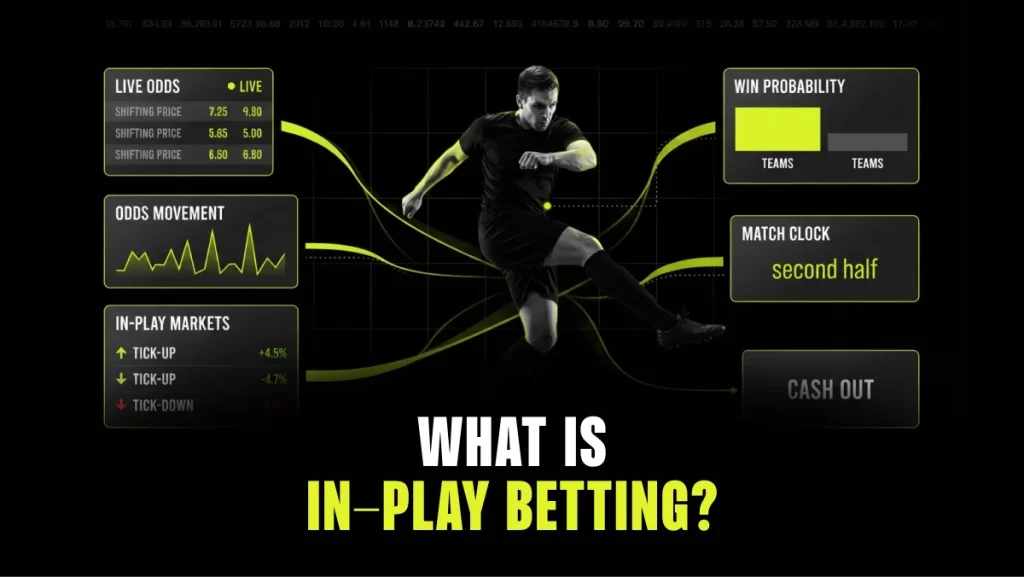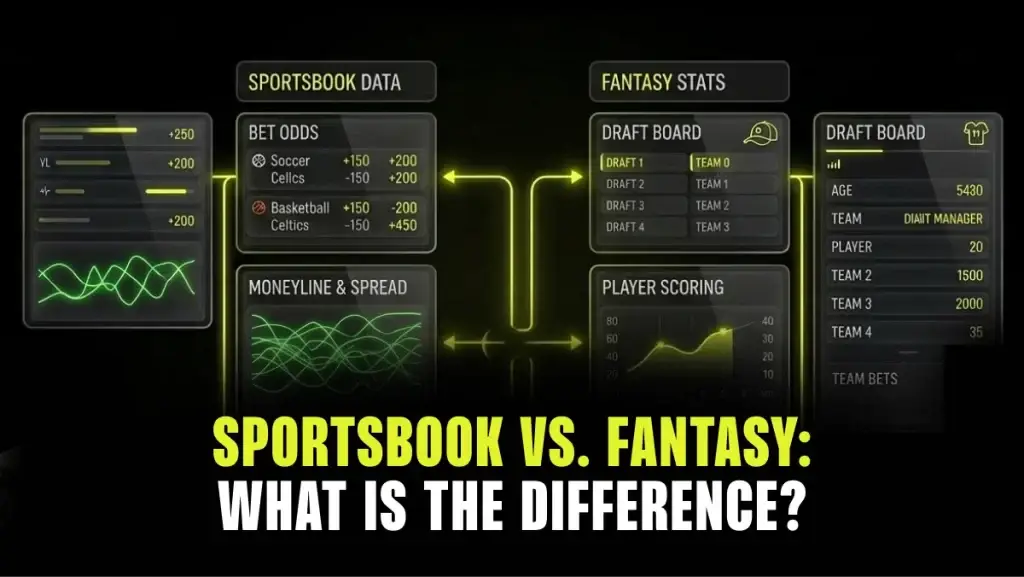
By capturing, structuring, and interpreting event data, sportsbooks can accurately price markets, manage exposure, and react to live action.
Accurate in-play pricing, sharper risk detection, bettor personalization, responsible gaming compliance, and live performance benchmarking all stem from strong analytics foundations.
Estimation models, efficiency ratings, momentum indicators, and player-level prop data each serve different markets, and their relevance varies by sport, format, and game state.
Automated models process variables more quickly than any manual trading desk can. They power in-play pricing, anomaly detection, and bettor behavior analysis at scale.
ARENA360 delivers automated trading, risk management, and player engagement tools built for the speed and coverage modern markets demand.
Sports data analytics is the process of collecting, structuring, and interpreting information from sporting events. Data may include player statistics, match outcomes, performance metrics, in-game events, or historical records.
The raw inputs come from a range of sources before, during, and after games, both on and off the field. Statistical models and artificial intelligence help turn numbers into insights, which then have broad applications and benefits for coaches, teams, and sportsbooks alike.
For a coach, data analytics can help identify fatigue patterns to prevent injury or scout underestimated talent. For a sportsbook, the data may determine pre-match odds, drive real-time price adjustments, and inform how the betting product is structured.
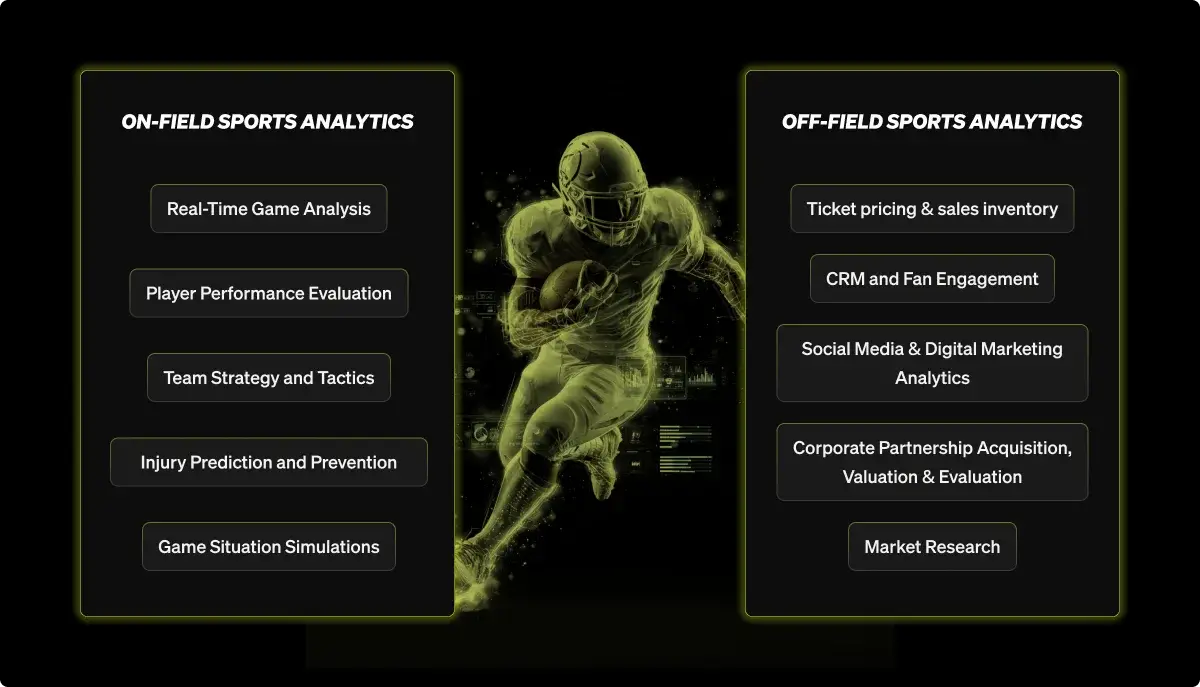
The use cases of sports data analytics are many, and the benefits for betting operators are direct and measurable:
Ultimately, accurate, fast-processed data leads to smarter decisions and stronger margins.
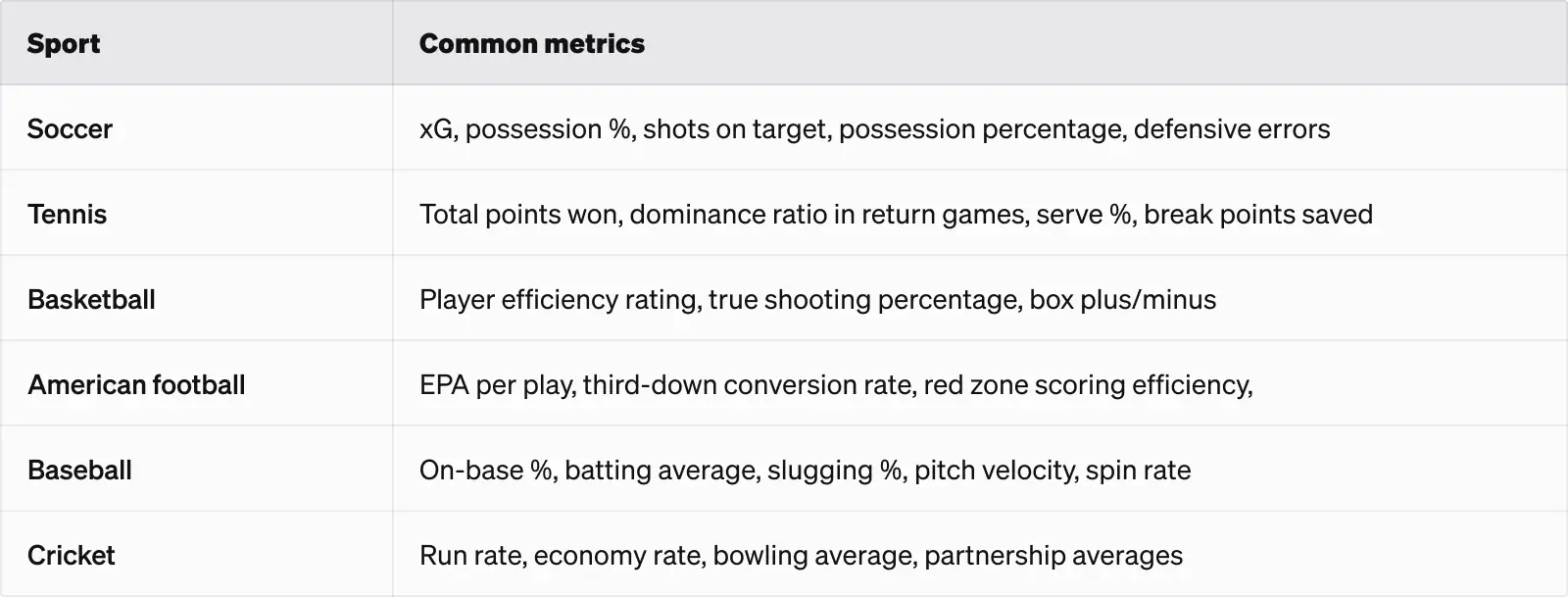
Not all data points carry equal weight for a trading desk. The metrics that matter most depend on the sport, market type, and whether you’re pricing pre-match or in-play. Here are some examples:
Each sport has a specific data profile. The metrics that matter, the speed at which they change, and the markets they support all differ significantly.
The analytics pipeline for a modern sportsbook has several stages, the first being collection.
Data can be captured through devices such as sensors and wearables, or through observation. For example, a ball-tracking camera captures positional data at dozens of frames per second, while a manual scout logs events as they happen.
Next, statistical models, algorithms, and machine learning (ML) models help structure raw input. ML models cross-reference player form, head-to-head records, venue trends, weather, and live match state to generate probability distributions for odds engines.
AI is a useful tool for analysis, particularly in two areas. In-play automation recalculates outcome probabilities as events occur, enabling price adjustments without manual intervention. Anomaly detection flags unusual betting patterns that signal sharp information or integrity concerns.
Finally, processed data drives live operations, such as market management or odd setting. Latency matters most here. In micro-betting markets, the gap between a real-world event and the odds reflecting it is measured in milliseconds. Operators on delayed feeds are effectively offering stale prices.
The value of the sports analytics market is projected to rise from roughly $5.3 billion in 2026 to nearly $18 billion by 2031, growing at a 27%+ annual growth rate. Such an impressive estimate results from rapid technological advancements over the last few years, which indicate a continuous trend. Here’s what we can expect to see or see more of in the near future:
Overall, greater speed, accuracy, personalization, and transparency are set to define the next era.
Sports data analytics is the operating system of a modern betting site. Pre-match pricing, in-play volatility management, bettor retention: every layer depends on data quality, speed, and breadth. Bookmakers still relying on limited coverage, delayed feeds, or manual processes risk falling behind as the market accelerates.
The right data partner makes all the difference. LSports gives operators the infrastructure to compete at the speed and scale the market demands, without the cost or complexity of building it alone.
LSports is a world-leading sports data provider built to solve the modern bookmaker’s challenges. Where data monopolies create cost pressure and coverage limitations, LSports offers an independent alternative. Its AI and computer vision technology collect data from public broadcast sources, while its scouting network reports from live events, to free operators from monopoly-priced feeds.
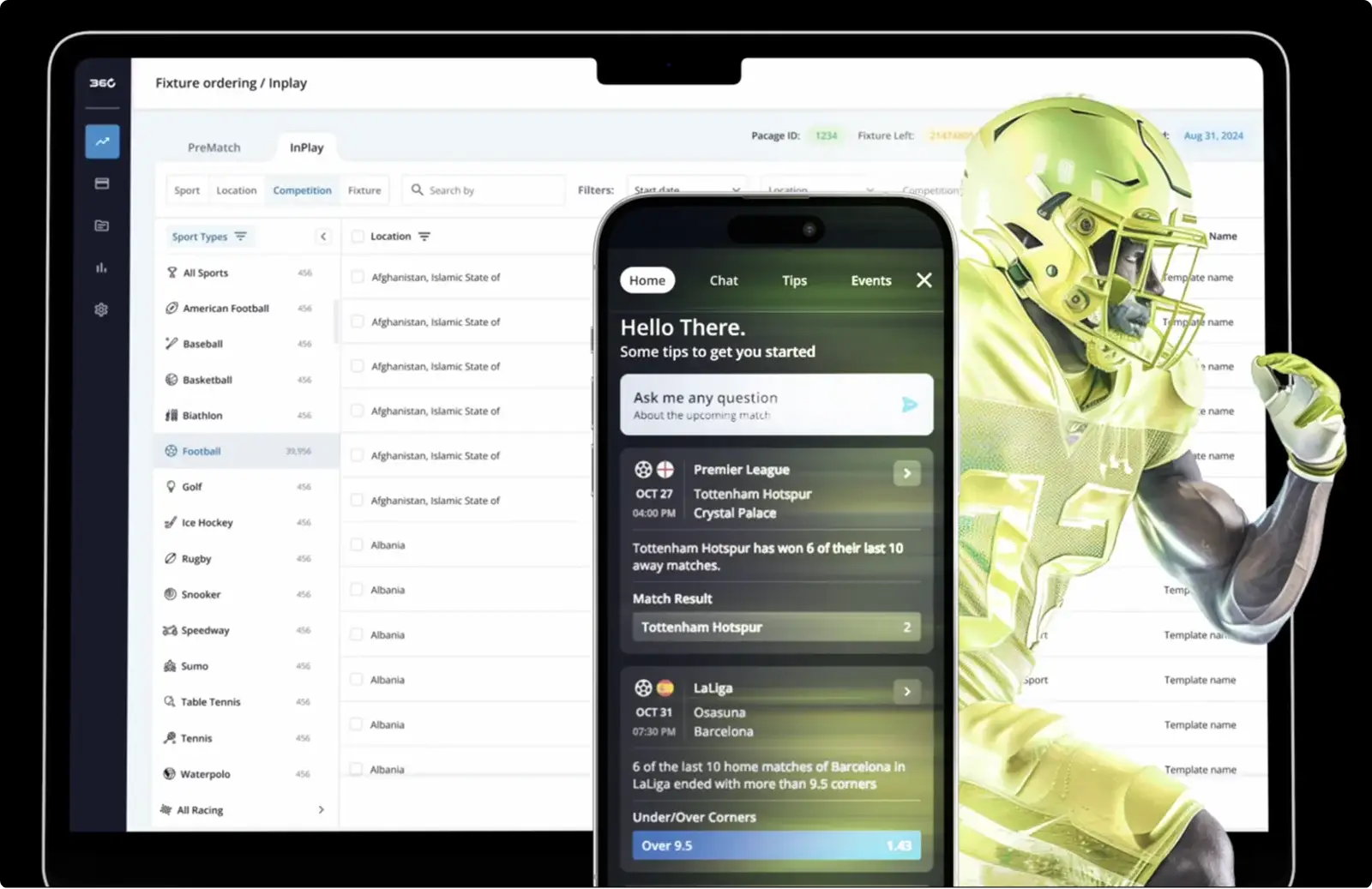
At the center of the offering is ARENA360, an integrated platform that consolidates trading operations into a single environment:
The coverage speaks for itself: 100+ sports, 15,000+ leagues, and 2,500 markets, all delivered at close-to-zero latency from 100+ live sources. This breadth lets operators capture revenue from niche competitions that major providers ignore.
For operators who want full capability without the operational lift, LSports’ Managed Trade Service handles day-to-day management of ARENA360. Sportsbooks focus on marketing and profit, while LSports handles the rest.
Sign up for a free trial or demo and outpace the market with the industry’s most comprehensive and independent sports data ecosystem.
Sports data analytics is the practice of collecting and interpreting data from sporting events to inform decisions. For sportsbooks, it drives odds generation, in-play market management, risk control, and bettor experience optimization.
AI models generate probabilistic forecasts based on historical data, current form, and contextual factors. They produce probability distributions faster and more reliably than manual assessment, which is crucial for quick in-play markets. Still, they don’t predict outcomes with certainty.
The best sports data provider depends on operational needs. LSports stands out for operators who need broad coverage across 100+ sports and 15,000+ leagues, competitive pricing outside exclusive rights structures, and a full-stack platform covering trading, risk, engagement, and analytics. LSports’s AI-driven collection ensures speed and accuracy without the high price of monopoly feeds.