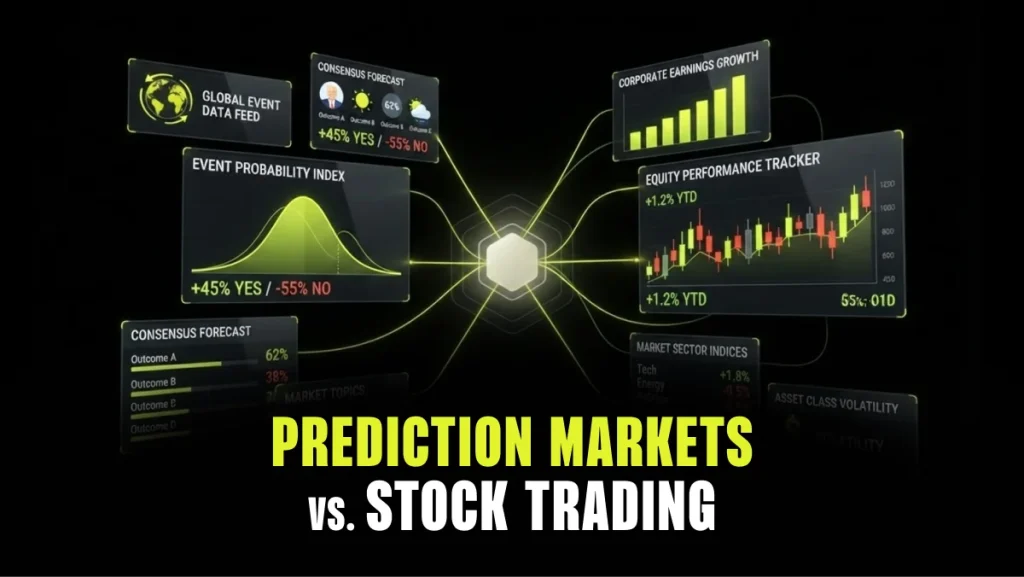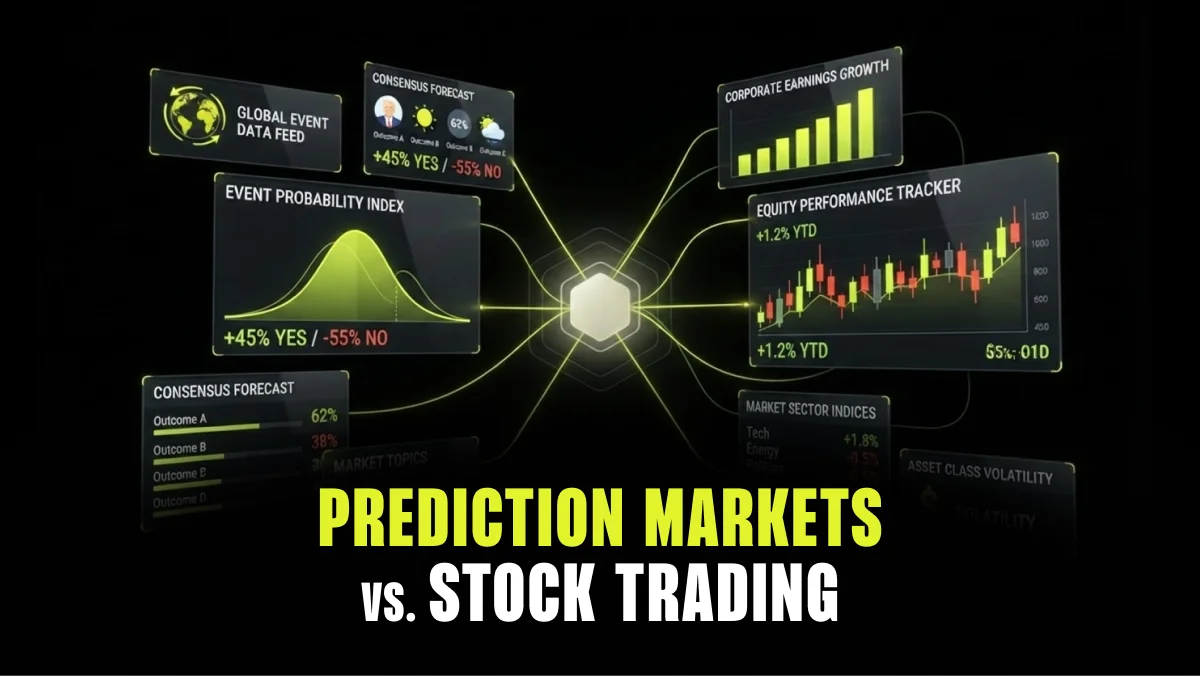

Prediction market contracts settle when the event is resolved and pay according to the published settlement rules. Stocks, by comparison, have no expiration date and can be held for as long as the investor chooses.
A prediction market contract price reflects the market’s current assessment of an event’s likelihood, while a stock price represents the market value of a company’s shares.
Prediction market traders primarily face outcome, liquidity, and resolution risks, while stock investors deal with poor company performance, competition, shifting economic conditions, interest rates, and market-wide declines.
Adding prediction markets allows you to expand your offering with markets on politics, finance, technology, entertainment, and other real-world events. This can help increase engagement and retention, and attract new audiences.
LSports’ Prediction Markets Feed provides real-time pricing, settlement rules, contract specifications, and automated settlement data through a single integration. It allows you to launch and scale prediction markets efficiently.
Prediction markets are platforms where users buy and sell contracts based on the outcome of a future event. In most cases, they choose between two outcomes: “Yes” or “No.” If their prediction is accurate, the contract pays out a fixed amount once the event is officially resolved.

As new information becomes available, the price of each contract changes, reflecting how likely the market believes that outcome is. Depending on the platform and local regulations, prediction markets may cover topics such as:
Stock trading is the buying and selling of shares that represent ownership in a company. If the company’s share price increases, investors can make a profit by selling their shares. Some companies may also reward shareholders by paying dividends, allowing investors to earn income while holding the stock.

Depending on the type of shares they own, investors may have voting rights that allow them to participate in important company decisions, including electing directors and voting on major corporate changes.
Prediction markets and stock trading both rely on fluctuating market prices, but they focus on different assets and serve different purposes. Here are the key differences:
When someone buys a contract in a prediction market, they are betting on the outcome of a specific event.
For example, if the market asks whether a football team will win a competition, a Yes contract pays out only if that team wins under the market’s rules. Buying the contract does not give the trader any ownership in the team, the competition, or the prediction market platform.
A stock represents partial ownership in a company. As a shareholder, you own a small portion of the business and may benefit if the company grows in value. Your investment is tied to the company’s long-term performance rather than the outcome of a single event.
Prediction markets let people trade on the outcome of future events that have a clear, verifiable result. These may include:
Each contract is tied to a single event and is settled once the outcome is known.
In stock trading, investors can purchase stocks in businesses across industries such as technology, healthcare, banking, energy, and retail.
While a company’s share price is influenced by events such as earnings reports, product launches, management changes, and economic conditions, the stock itself does not move based on any single event. Instead, its value reflects the market’s ongoing expectations about the company’s overall performance.
In prediction markets, prices are based on supply and demand. Buyers and sellers place orders, and the contract price changes as trades take place.
For example, if a Yes contract trading at a maximum value of $1 is priced at $0.64, many traders interpret that as the market believing there is roughly a 64% chance the event will happen. As new information becomes available, the price rises or falls to reflect changing expectations.
However, prediction market prices are not perfect probability forecasts. They can also be affected by factors such as:
Stock prices are also determined by supply and demand, but they mean something very different. A stock trading at $64 does not mean there is a 64% chance of anything happening. It means one share of the company currently costs $64. That price reflects how investors value the business based on factors such as its:
Prediction market contracts have fixed maximum gains and losses.
For example, if a Yes contract is purchased for $0.35 and settles at $1, it returns $0.65 per contract before fees. If the event does not happen and the contract settles at $0, the contract holder loses the $0.35 purchase price. This makes the potential profit and loss known before the trade is placed.
Stocks have a different return profile. There is no fixed limit on how much a company’s share price can rise, so the potential upside is theoretically unlimited. At the same time, a stock can lose all of its value if the company fails.
In addition to capital gains, some companies also pay dividends, giving shareholders another potential source of return, although dividend payments are never guaranteed.
Every prediction market contract has a defined expiration point. Some markets, such as predictions of the next goal in a football match, settle within minutes. Others, such as election or economic forecasts, may remain open for months. Once the event occurs and the outcome is officially confirmed, the contract is settled and ceases to have value.
Stocks do not have an expiration date. Shares can be held for minutes, months, or decades, depending on the investor’s strategy. They continue to exist until they are sold or subject to a corporate action, such as a merger, acquisition, or delisting.
Prediction markets and stock trading aren’t governed by the same rules.
Stock markets are regulated as part of the financial system. In the United States, the Securities and Exchange Commission (SEC) oversees the securities market. Stock exchanges, broker-dealers, and other market participants must comply with rules governing investor protection, market integrity, disclosures, recordkeeping, and financial reporting.
In the United States, federally regulated prediction market platforms can operate under the Commodity Futures Trading Commission (CFTC) as Designated Contract Markets (DCMs). These platforms must meet requirements for market integrity, participant protection, recordkeeping, financial safeguards, and market manipulation prevention.
The regulatory framework for prediction markets is still taking shape. In recent years, the CFTC has introduced additional guidance and proposed new rules, particularly for contracts related to sports events and other event-based markets.
Prediction markets and stock trading both involve financial risk, but the reasons people lose money differ.
The main prediction market risks include:
In contrast, a company’s share price can fall because of:
Like prediction market prices, stock prices can also be highly volatile, causing significant gains or losses over both the short and long term.
You don’t need to choose between prediction markets and sports betting. The same audience trades both. Offering them together is possible and brings many benefits:
LSports provides the technology you need to launch and manage prediction markets easily. Its Prediction Markets Feed aggregates real-time pricing and market data from leading prediction market exchanges, eliminating the need to integrate with multiple providers while ensuring continuously updated markets.
The feed includes everything needed to power a complete prediction market offering, including:
Coverage extends across a wide range of prediction market categories, including:
Request a demo today to see the full prediction markets offering LSports can bring to your sportsbook.
Yes. Many prediction market platforms allow users to sell their contracts before the event is officially resolved, rather than waiting for the final result. This lets traders lock in a profit, reduce a potential loss, or respond to new information as prices change.
No. Prediction markets complement traditional sports betting. Many operators are choosing to offer both instead of switching to prediction markets.
No. While you can use a contract’s price to estimate how likely an event is to happen, it is not an exact probability. Factors such as trading activity, liquidity, fees, and market conditions can influence the price.
No. Prediction market contracts do not pay dividends because they do not represent ownership in a company. A contract only pays out if the event settles in accordance with the market’s rules.