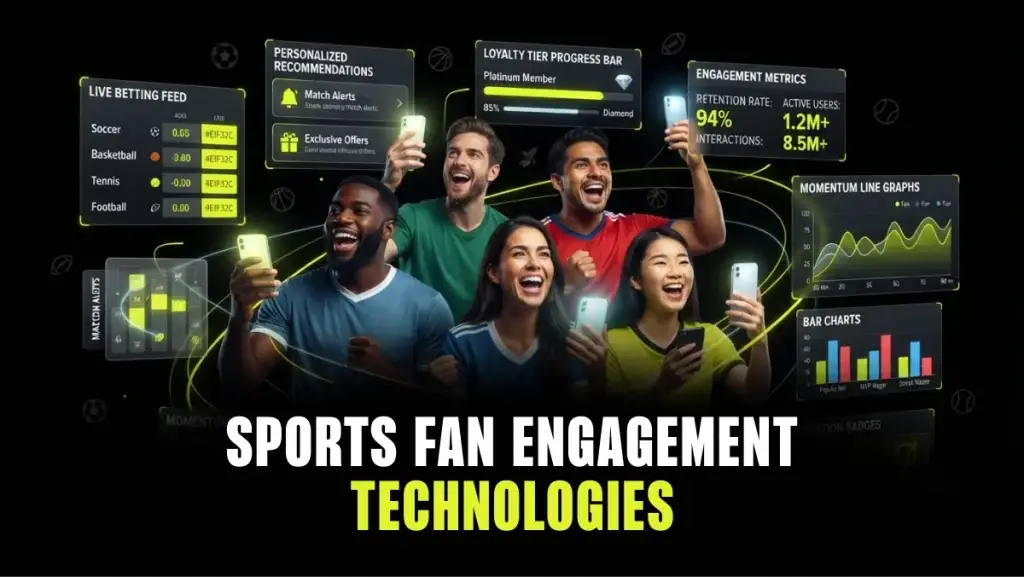
It applies game-like mechanics such as points, leaderboards, and challenges to non-gaming contexts. This drives deeper fan involvement, higher session times, and stronger platform loyalty.
Prediction-based contests, live quizzes, and reward systems give bettors reasons to stay on-platform beyond standard wagers. TMG Research reports that 73% of global respondents said rewards would increase their interest in betting.
Platforms like Fantasy Premier League attract over 12 million participants per season. League invites, shareable achievements, and the “manager” experience keep users returning week after week.
Official team apps can boost engagement and collect first-party data through gamified content like polls and quizzes. Live broadcasts and in-stadium experiences are more immersive when combined with games.
Features like Points in Play, Live Match Pro, Tipster, and live data across 100+ sports allow sportsbook operators to implement gamification without building from scratch.
Gamification is the practice of applying game-like elements to non-gaming environments, such as betting sites and sports team fan apps. The core mechanics include:
These elements may encourage fans to compete against each other, predict outcomes, and engage with content beyond the sports events.
Gamification creates value on both sides of the platform. Users get a more interactive, rewarding experience. Operators get higher engagement, stronger loyalty, and more revenue.
For users, gamification adds structure and purpose to the experience. Prediction challenges, quizzes, and leaderboards give them a reason to participate rather than just view. Completing a challenge or climbing a ranking creates a sense of achievement. Social features like friend competitions and group leaderboards add a community dimension.
These effects on motivation and behavior translate into measurable outcomes for operators and sports organizations. Higher engagement drives longer session times and increased betting frequency, while higher satisfaction leads to lower churn. Additionally, every interaction, from a quiz answer to a leaderboard check, generates first-party data that sharpens personalization, improves targeting, and informs product decisions.
Sportsbook operators stand to gain the most. Betting platforms already compete on odds and market coverage, where margins of differentiation are thin. Gamification adds a distinct experience layer and repositions the sportsbook as an entertainment source rather than a mere betting tool.
Gamification works because it targets intrinsic psychological drivers, such as recognition, competition, and a sense of progress. Earning a badge, climbing a leaderboard, or completing a challenge activates the same reward circuits that keep users engaged in video games.
The effect on retention is clear. When users earn points daily, unlock rewards for activity, or contribute to a community, they are more likely to open an app and keep using it.

Here are five effective examples of gamification for sports fans:

Betting already contains core gamified elements, namely prediction, risk, competition, and reward. Gamification builds on that foundation to increase session time and betting frequency. Some approaches include:
Gamified features increase bet volume during live events, especially in-play. They also convert casual users into habitual ones by giving them reasons to engage even when they are not actively wagering.
Fantasy sports allow fans to become virtual team managers. Participants draft players, earn points based on real-world performance, and compete against friends or the public over an entire season. The format drives deep, sustained engagement because every match across the league becomes relevant to the user.
Fantasy Premier League, the official Premier League fantasy game, had 11.5 million participants in the 2024/2025 season. Its success rests on a few key mechanics:
In betting, fantasy leagues serve as valuable acquisition channels. Users who manage a fantasy team watch more matches, consume more statistics, and are more likely to place bets. Operators can also host branded fantasy competitions on their own platforms. Each sign-up gives them a potential new bettor they can reach with promotions and personalized offers.
Fantasy leagues also produce first-party data on preferences, favorite teams, and engagement patterns that sharpen targeting over time.
Gamified official team apps boost fan experiences. When users download and register, they unlock exclusive content, match-day features, and games like polls and quizzes.
Chelsea FC’s official app, for example, includes a Play Predictor feature that awards points for correctly forecasting match events, which keeps fans engaged throughout the season.
Tiered loyalty programs are another valuable engagement tool. Clubs like Manchester United and FC Barcelona reward fans for attending matches, purchasing merchandise, and engaging online. Points unlock exclusive content at lower tiers and VIP experiences at higher ones.
Esports are gamification in its purest form, and they’re growing more popular each year. Titles like League of Legends, Counter-Strike, and Fortnite attract massive global audiences. They operate on the same mechanics that drive engagement in traditional sports, such as leaderboards, rewards, and tournaments.

Several major sports leagues have launched official esports divisions to reach younger demographics and extend fan engagement beyond match days. Some include:
Live viewing experiences, both in-stadium and at home, increasingly incorporate gamified elements, such as:
For sportsbook operators, the overlap between second-screen engagement and live betting is key. Seamless integration between gamified content and the bet slip shortens the path from engagement to wager.
Gamification is effective, but implementing it well is not simple. Operators face several recurring challenges:
Before you can gamify your sportsbook, you need accurate, fast, and comprehensive sports data. Without it, live quizzes misfire, leaderboards lag, and predictions lose credibility.
LSports provides the data and tools to ensure seamless experiences at scale.
LSports collects data from 100+ live sources using its global scouting network, AI, and computer vision. The data arrives at your platform with near-zero latency, and spans 100+ sports, 15,000+ leagues, and 2,500 markets.

The ENGAGE toolkit offers purpose-built gamification, engagement, and visualization features for sportsbooks. One example is Points in Play, a data-powered gamification platform that embeds quizzes, trivia, user rankings, and live rewards into sporting events. Active in 50+ competitions and over 1,000 live events, it integrates directly with bet slips to convert engagement into wagers.
LSports offers many other engagement tools:
LSports offers 3 other modules to support the operational side. TRADE automates odds generation and real-time adjustment, while DEFEND gives you the tools to control exposure and risk. BOOST surfaces margin opportunities through live benchmarking, helping you pinpoint where gamified activations deliver the highest return.
Sign up for a free trial to see how LSports can turn your sportsbook into a prime destination for sports entertainment.

While Nike operates in retail, its approach illustrates gamification’s core principles and effects.
The Nike+ ecosystem integrates fitness challenges, achievement tracking, personalized coaching, and social sharing into a single platform. Users earn badges for milestones, compete with friends on distance targets, and unlock product discounts. As a result, Nike received more repeat purchases, stronger brand loyalty, and organic word-of-mouth.
The next wave of sports gamification will increasingly involve AI, blockchain, and immersive technology: