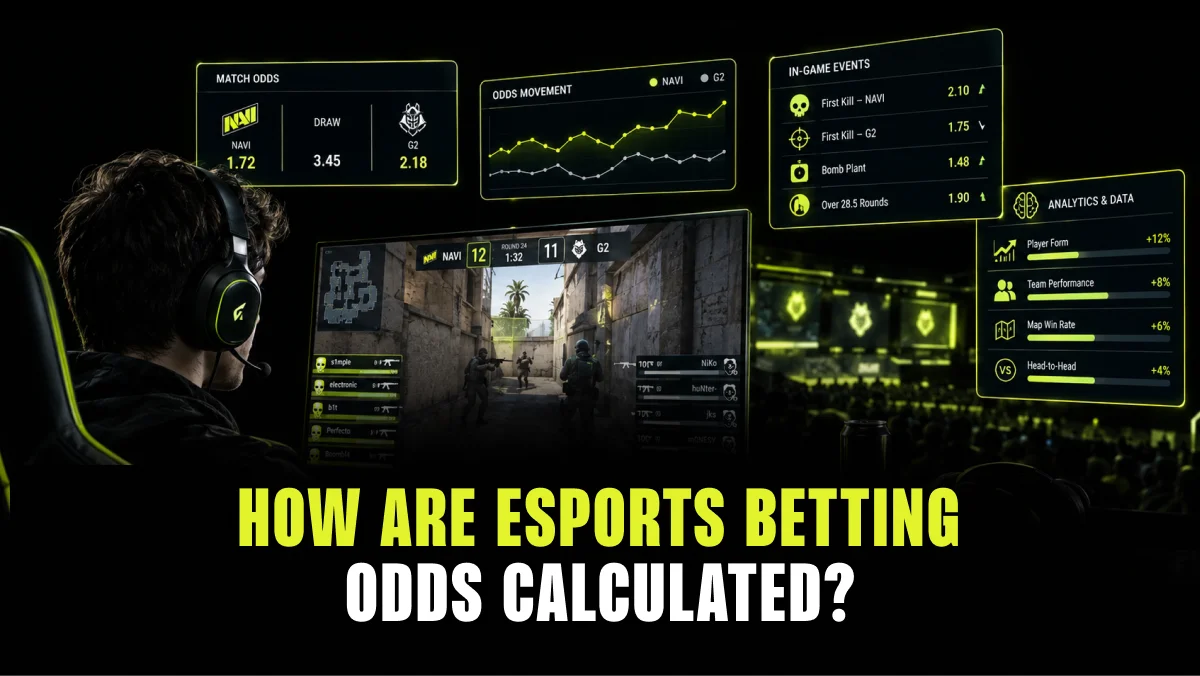

You need to assess how likely each result is, convert those probabilities into odds, and then add your sportsbook margin.
Consider opponent strength, current form, maps, drafts, game patches, match format, and situational factors to build more accurate prices.
Use game-specific data such as round scores, team economy, kills, objectives, gold, and map position to recalculate probabilities as the match develops.
You can cover match winners, handicaps, totals, correct scores, player props, first objectives, and tournament markets to give bettors more ways to engage.
LSports gives you the data needed to power eSports markets, while its ARENA360 offering helps you automate trading, manage risk, optimize performance, and improve bettor engagement.
eSports are organized video game competitions where professional players and teams compete against each other. They can range from smaller online tournaments and regional leagues to major international events held in large arenas. Popular eSports include:
eSports has grown into a major global entertainment industry, with top tournaments drawing millions of viewers. Some of the most popular competitive titles include:

*Audience data is based on peak viewership figures reported by Esports Charts for League of Legends, Dota 2, VALORANT, and Mobile Legends: Bang Bang, and by BLAST.tv for Counter-Strike 2.
eSports betting uses the same odds formats as regular sports betting. The main ones include:
eSports odds can depend on a wide range of game-specific factors that change quickly, making pricing more complex. Here is how you can account for these factors and calculate accurate eSports betting odds:
Before calculating odds, you need to define exactly what the bettor is betting on. For example, does the market cover a single map, the entire best-of-three match, or a team’s advancement to the next tournament round?
Make sure your data feed, trading system, bet slip, and house rules all use the same team names, map numbers, start times, and settlement conditions. This helps you price markets correctly and prevents confusion when it is time to settle bets.
Next, you need to estimate how strong each team or player is based on past performance. You can start with a rating system such as Elo, then improve it by weighting recent results more heavily and accounting for factors such as opponent strength, maps, sides, regions, and tournament level.
Do not rely only on wins and losses. A team that wins eight of its last ten matches against weaker opponents is not necessarily stronger than a team that wins five out of ten against top-ranked competition.
For example, look at Nigma Galaxy and Team Falcons at The International 2026. Nigma finished the group stage with an impressive 4–1 record, while Falcons went 3–2 and had to play an elimination match to reach the playoffs.
However, Nigma had faced a relatively easier set of opponents, while Falcons had played stronger competition. So, when the two teams eventually met in the playoffs, sportsbooks still considered Falcons the much stronger team and priced them as clear favorites at 1.51.

You also need to consider the conditions under which the match is being played. eSports games change regularly through patches that can strengthen or weaken characters, adjust items, modify maps, and shift which strategies are most effective. After a major update, older results may be less useful for predicting how a team will perform.
Maps and drafts can also significantly change the odds. In Counter-Strike 2 or VALORANT, a team that is the overall underdog may be much stronger on a particular map. In Dota 2 or League of Legends, the draft can give one team better lane matchups, stronger late-game potential, or a more effective team-fight composition.
For this reason, you may pause certain markets while the map veto or draft takes place. Once the selections are confirmed, traders can use this new information to recalculate the odds before reopening the market.
You also need to consider how many maps or games a team must win to take the series. A best-of-one is generally less predictable than a best-of-five because a favorite has fewer chances to recover from one poor map. The format also affects markets such as correct score, map handicaps, and total maps played.
When modeling the series, account for:
You should also consider the circumstances surrounding the match, as two teams with similar statistics may perform very differently depending on the conditions. These factors should not outweigh stronger performance data, but they can help make the odds more accurate.
Consider situational factors like:
However, use historical head-to-head results carefully. A team may have beaten the same opponent several times, but those matches become less relevant if the rosters, maps, game version, or competitive conditions have changed significantly.
Once the match starts, you need to continually update the odds as the game develops. Your in-play model can start with the pre-match assessment and then incorporate live match data.
The exact data depends on the eSport:
Your model can use this information to estimate the probability of each remaining outcome and update the odds accordingly. Markets may also need to be temporarily suspended during decisive moments, such as a bomb plant, major team fight, objective contest, or interruption to the live data feed.
Here are the main eSports betting markets you should consider offering on your sportsbook:

LSports provides an eSports API that combines simulated sports with popular competitive gaming titles, covering 23 sports and 950,000 fixtures.
To help turn this data into betting markets, TRADE automates key parts of the trading process, including odds creation, market management, live updates, and settlement. This helps you keep pre-match and in-play eSports markets accurate as rounds, kills, objectives, and match scores change.
LSports also provides additional tools to support every part of your sportsbook offering:
Request a demo to see how LSports can help you broaden your eSports coverage, automate trading, manage risk, and improve the betting experience.
Yes, eSports betting is legal in many jurisdictions, but the rules depend on where you operate. In the US, sports betting is regulated primarily at the state level, and individual states determine whether licensed sportsbooks may offer eSports markets and under what conditions.
Some of the most popular eSports bets include match winner, map winner, handicaps, total maps, correct series score, kill totals, first kill or first blood, and player props. The markets that attract the most interest can vary considerably between games because titles such as Counter-Strike 2, League of Legends, Dota 2, and VALORANT have different competitive structures and statistics.
Sportsbooks typically receive live eSports data through specialized data feeds that collect and distribute match events, such as scores, rounds, kills, objectives, and player statistics. Your trading system can then use this information to update markets and odds as the match develops.
Frequent game patches, roster changes, map selections, drafts, different tournament formats, and rapidly changing live match conditions can all make eSports markets challenging to price. You also need reliable, low-latency data because key events can change an outcome’s probability within seconds.